
Whistling AC Repairs for Miami Homeowners
Walking into your home in Brickell or Coconut Grove should offer immediate relief from the heavy Miami heat. That comfort vanishes when a high-pitched whistle starts coming from your vents. This sound is more than a simple annoyance. It usually indicates that your air conditioning system is struggling to breathe. In our current 2026 climate where humidity levels consistently push the limits of residential HVAC hardware, these sounds require immediate attention before they lead to total system failure.
A whistling sound is almost always related to airflow or pressure. Think of it like a flute. When air moves at high speeds through a small opening, it creates a tone. In an HVAC system, this happens when the blower motor is trying to pull or push air through a space that is too narrow. If you are dealing with this in the middle of the afternoon, you might need to know what to do when your AC fails in the middle of a Miami heatwave to prevent your home from reaching dangerous temperatures.
High velocity air creates friction against the internal walls of your ductwork. This friction manifests as noise. When the system is properly sized, the air moves at a speed that is quiet. When something changes the balance, the pitch rises. Residents in the greater Miami metro area often experience this after installing new filters or when the intense 2026 humidity causes materials to expand and shift.
The Science of High Static Pressure in Modern Florida HVAC Systems
Static pressure is the resistance to airflow within your HVAC system. In 2026, most Miami homes use high-efficiency systems with variable speed blower motors. These motors are smart. If they detect resistance, they ramp up their speed to ensure your rooms get enough cold air. This increased speed creates more friction as air moves through your ducts and grilles. When that friction reaches a certain point, the air begins to vibrate, creating that sharp whistling sound you hear in your hallway or bedroom.
A variable speed motor will try to overcome a dirty filter by spinning faster. This solves the cooling problem temporarily but creates a noise problem. It also causes the motor to draw more amperage. This extra power consumption leads to higher utility bills and premature component failure. Many homeowners in Little Havana or Westchester assume the noise is just part of the system operation, but it is actually a cry for help from the blower assembly.
Poorly sized ductwork is a common cause of high static pressure in older neighborhoods. Many of these homes were originally built with smaller systems. When owners upgrade to modern high-capacity units without resizing the ducts, the system becomes choked. The air is forced through a straw when it needs a tunnel. This puts immense strain on the motor and can significantly shorten the lifespan of your unit. Proper duct design is a core part of residential comfort in any Miami suburb.
Why Variable Speed Motors Struggle with Restrictive Ducts
In the current 2026 market, inverter driven compressors and variable speed air handlers are the standard. These systems are designed to run at lower speeds for longer periods to manage Miami humidity. If the static pressure is too high, the motor cannot run at its lowest, most efficient setting. It stays stuck in a high-RPM mode. This negates the energy savings you expected from a high-SEER2 system. You might notice the whistle is constant rather than intermittent. This is a sign that the system is perpetually fighting against its own ductwork.
Case Study of Airflow Restoration in a Coral Gables Residence
A recent project in a 1920s Mediterranean Revival home in Coral Gables provides a clear example of these issues. The homeowner had installed a premium 20-SEER2 system early in 2026. While the home stayed cool, a piercing whistle echoed through the plaster hallways every time the unit ramped up. The owner had already changed the filter multiple times, but the sound persisted.
Our diagnostic team performed a full static pressure test. We found that the original return air plenum was less than half the size required for the new five-ton blower. The air was moving at over 1,200 feet per minute through the return grille. This created a venturi effect that produced the whistle. The dense plaster walls of the Coral Gables home acted as an amplifier for the sound.
The solution involved more than just a quick fix. We installed a secondary return air duct in the master suite to alleviate the vacuum at the main intake. We also replaced the restrictive decorative iron grille with a high-flow aluminum model. Once these changes were made, the static pressure dropped from 0.85 inches of water column to a perfect 0.48. The whistle disappeared and the system energy usage dropped by fifteen percent. This case demonstrates that modern 2026 equipment requires modern airflow volume.
Common Airflow Obstructions Found in Miami Dade County Homes
The most frequent culprit for an AC whistle is a dirty air filter. In 2026, many homeowners use high-MERV filters to combat the rising pollen counts and urban dust in Miami-Dade County. While these filters are excellent for air quality, they become clogged quickly. A clogged filter starves the blower motor of air. This creates a vacuum effect in the return air cabinet. The air then tries to pull through any tiny gap in the cabinet door or the filter frame, resulting in a whistle.
Another common obstruction involves the return air grilles themselves. Many modern home designs in Doral use decorative grilles. If these grilles do not have enough open surface area, the air makes a noise as it passes through the metal slats. You can test this by opening the door to your return air closet. If the whistling stops immediately, the problem is likely the grille or the filter. If it continues, the issue is deeper within the internal components.
Closed vents in unused rooms also cause whistling. Homeowners often think they are saving money by closing vents in guest rooms. This is a mistake. HVAC systems are balanced for the specific square footage of your home. Closing vents increases the pressure in the remaining open ducts. This leads to noise and can even cause your evaporator coil to freeze over. Keep all vents open to maintain the correct pressure balance.
Professional Diagnostic Tools for Noise Resolution in 2026
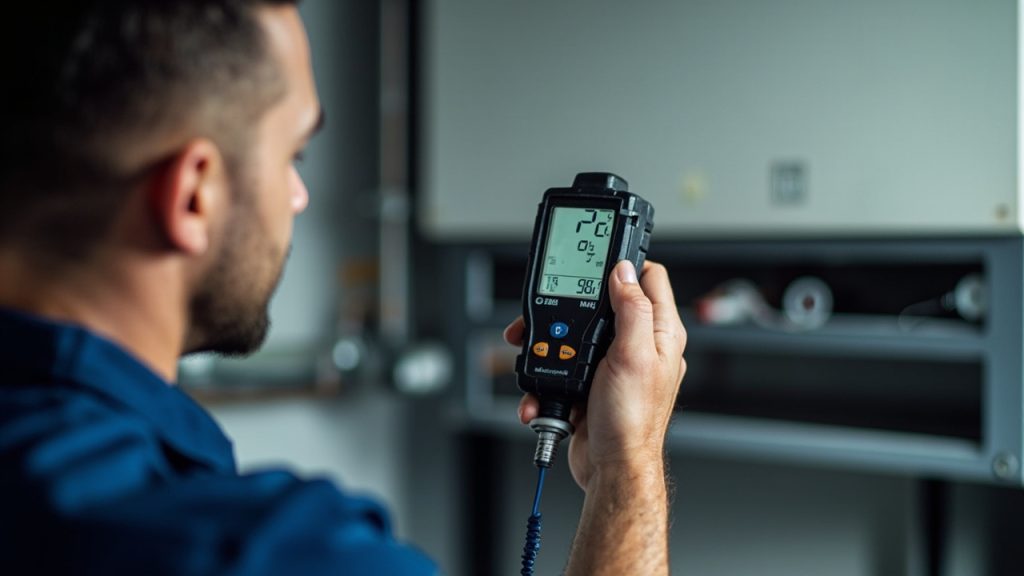
When our technicians arrive at your Miami home, we do not just guess where the noise is coming from. We use advanced diagnostic tools that are standard in 2026. This includes digital manometers to check for pressure imbalances and thermal imaging cameras to find air leaks in ductwork hidden behind walls. We also check the blower motor amperage. A motor that is struggling against high pressure will draw more power, which shows up clearly on our meters.
Modern 2026 HVAC technicians also use Bluetooth-enabled pressure transducers. These allow us to monitor the system performance in real-time on a tablet while the system cycles through different stages. We can see exactly at what RPM the whistle begins. This data driven approach ensures we only fix what is actually broken. We also look at the duct geometry. In many Miami homes, sharp ninety-degree turns in the ductwork create turbulence. We use vane anemometers to measure the airflow velocity at each individual supply vent.
Smart Home Integration and Pressure Monitoring
Smart home technology in 2026 has progressed to include active HVAC monitoring. Many systems now come with factory-installed sensors that track static pressure. If you have a smart thermostat integrated with your Miami home automation system, you might receive an alert about high pressure before you even hear the whistle. These systems can predict a filter clog based on the change in airflow resistance over several days. Utilizing these 2026 smart integrations is the best way to prevent the mechanical stress that causes noise.
Comparison of Common HVAC Noises and Likely Causes
The table below helps you distinguish between different sounds and what they mean for your system health in the current 2026 market.
| Sound Type | Likely Source | Urgency Level |
|---|---|---|
| High Pitched Whistle | Restricted Airflow or Clogged Filter | Medium |
| Sharp Hissing | Refrigerant Leak or Internal Valve Issue | High |
| Rattling or Clanking | Loose Blower Component or Debris | High |
| Persistent Humming | Electrical Contactors or Capacitor issues | Medium |
| Squealing Sound | Worn Blower Belt or Motor Bearings | High |
When a Whistle Signals a Dangerous Refrigerant Leak
While most whistling is airflow related, a very specific type of whistle or hiss can mean you have a refrigerant leak. This typically occurs at the thermal expansion valve or within the evaporator coil. If the refrigerant is under high pressure and leaks through a microscopic hole, it creates a sound that is easily mistaken for air movement. You can usually tell the difference because a refrigerant leak whistle will happen even if you remove the air filter.
A refrigerant leak is a serious problem that requires a licensed professional. In 2026, the cost of modern refrigerants makes leaks expensive if they are not caught early. Low refrigerant levels cause your compressor to overheat, which can lead to a total system replacement. If you notice your AC is whistling and your home is not getting as cool as it should, turn the system off and call for a diagnostic immediately. Residents in areas like Doral can rely on trusted AC repair technicians to identify these leaks using ultrasonic leak detectors.
Another factor in our local area is the salt air. If you live near the coast, you must understand how to stop Miami salt air from destroying your outdoor AC unit. Salt air corrodes the copper lines and aluminum fins, making leaks more likely. A whistle coming from your outdoor unit is a major red flag that the condenser coil has been compromised by the salty environment.
DIY Troubleshooting for Whistling Air Conditioners
Before calling for a repair, there are several steps you can take to diagnose the whistle yourself. These steps can save you the cost of a service call if the problem is a simple maintenance issue. Start with the filter because it is the most common point of failure. Remove the filter and run the AC for a few minutes. If the whistling stops, buy a new filter with a slightly lower MERV rating. High-MERV filters are great for 2026 air quality but they require high-capacity blowers.
Inspect the vents throughout your home. Ensure all supply and return vents are fully open and not blocked by furniture or curtains. Check the return air intake for any debris or paper that might have been sucked against the grille. Sometimes a simple piece of loose paper is all it takes to create a loud whistling sound. Listen to the location of the noise. Walk around your home to pinpoint exactly where the sound is loudest. If it is at the vents, it is an airflow issue. If it is at the unit, it could be a motor or leak. Finally, check the dampers. If your home has a zoned system, a damper might be stuck in a partially closed position.
Typical Repair Timelines and Complexity
Understanding how long a repair might take helps you plan your day. Most noise issues can be resolved within a few hours once the cause is identified.
| Repair Service | Time Estimate | Complexity Level |
|---|---|---|
| Filter Replacement and Grille Cleaning | 30 Minutes | Low |
| Ductwork Sealing and Mastic Repair | 2 to 4 Hours | Medium |
| Blower Motor Adjustment or Replacement | 1 to 3 Hours | Medium |
| Adding New Return Air Duct | 4 to 8 Hours | High |
| Evaporator Coil Cleaning | 2 to 5 Hours | Medium |
Frequently Asked Questions About AC Whistling Noises
Why does my AC whistle only when it first turns on? This is usually due to the system ramping up to its maximum speed to meet the initial cooling demand. Once the home reaches a stable temperature, the variable speed motor slows down and the whistle may fade. It still indicates that your ducts are slightly too small for the peak capacity of the unit.
Is a whistling AC a fire hazard? A whistle itself is not a fire hazard, but the cause of the whistle can lead to danger. High static pressure causes the blower motor to overheat. If the motor fails and the electric heat strips turn on without enough airflow, the system could reach dangerous temperatures. In the 2026 Miami heat, you want to avoid any unnecessary heat buildup in your mechanical closet.
Can a whistle be caused by a dirty coil? Yes. In our humid 2026 environment, organic growth can build up on the evaporator coil fins. This narrows the paths that air must travel through. As the air squeezes through these smaller gaps, it speeds up and creates a whistling or rushing sound. Professional cleaning is the only way to resolve this and restore your system efficiency.
Why does the whistling get louder when I close my bedroom door? This happens because your bedroom likely has a supply vent but no return vent. When you close the door, the air has no way to get back to the main intake. This increases the pressure in the room and the ductwork, causing a whistle at the door gap or the vent. Installing a jump duct or a transfer grille can fix this problem permanently.
Do not let a small whistle turn into a massive repair bill. If you have checked your filters and the noise persists, it is time to have a professional look at your static pressure levels. Our team understands the specific challenges of the Miami climate and the high-efficiency systems common in 2026. We can help you restore quiet comfort to your home quickly and efficiently. Contact us to schedule a diagnostic visit and get your system back in balance.