menu

Gas Furnace Leak Repair in Miami – 24/7 Emergency Dispatch, Onsite in Under 60 Minutes

When you smell gas near your furnace, every second counts. Our certified technicians arrive fast, isolate the leak, and restore safe heat to your Miami home with zero guesswork and full code compliance.

Slider Image 1
Slider Image 2
Slider Image 3
Slider Image 4
Slider Image 5
Slider Image 7
Slider Image 8
Slider Image 9
Slider Image 10
Slider Image 11

Why Gas Furnace Leaks Are More Dangerous in South Florida Homes

You smell sulfur. You hear a faint hissing. Your carbon monoxide detector chirps. Stop what you are doing. Gas furnace leaks are not a weekend project. They are life-threatening emergencies that require immediate professional intervention.

Miami's subtropical humidity accelerates corrosion on furnace heat exchangers and gas supply lines. When salt-laden air from Biscayne Bay infiltrates your HVAC system, it attacks metal joints and valve seats. The result is pinhole leaks in gas lines, cracked heat exchangers, and failed pressure regulators. These failures release natural gas or propane into your living space, creating explosion risk and carbon monoxide poisoning hazards.

Most Miami homes sit on porous limestone foundations. Gas leaks can migrate through this substrate and accumulate in enclosed areas like garages or utility closets. You may not smell the odorant (mercaptan) until concentrations reach dangerous levels. Older homes in neighborhoods like Coral Gables and Coconut Grove often have vintage cast-iron gas piping that corrodes from the inside out, invisible until failure.

If you need to fix gas leak in furnace, do not attempt DIY repairs. Gas appliance work in Miami-Dade County requires licensed contractors familiar with Florida Building Code Chapter 4, Mechanical Systems. Improper repairs void your homeowner's insurance and create liability if someone gets hurt.

Turn off your gas supply at the meter. Evacuate the house. Call a certified technician who can perform combustion analysis, pressure testing, and heat exchanger inspection. Emergency furnace gas leak service is not about convenience. It is about survival.

Why Gas Furnace Leaks Are More Dangerous in South Florida Homes
How We Isolate and Repair Gas Leaks Without Cutting Corners

How We Isolate and Repair Gas Leaks Without Cutting Corners

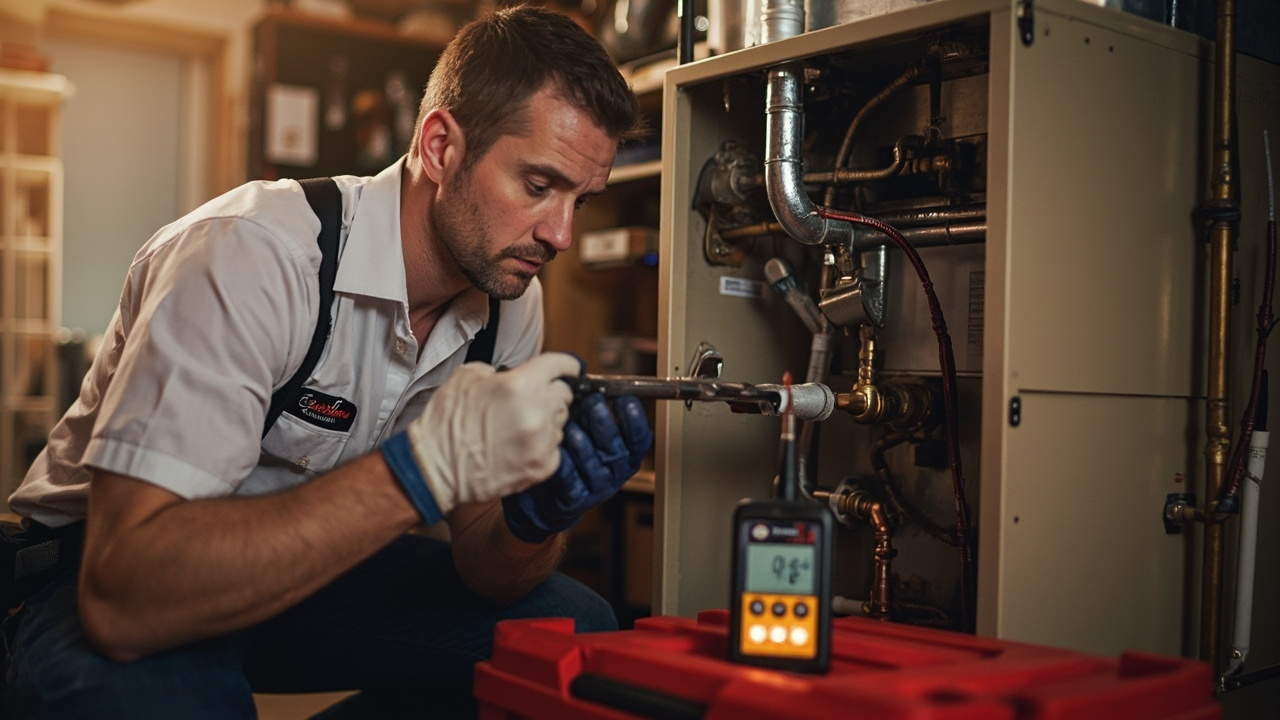
When you call for furnace gas line leak repair, we do not show up with a wrench and a prayer. Our trucks carry combustible gas detectors calibrated to 10 ppm sensitivity, manometers for measuring supply pressure, and thermal imaging cameras that reveal heat exchanger cracks invisible to the naked eye.

First step is source isolation. We shut off gas flow at the appliance valve and use electronic leak detectors to trace the compromised section. Common failure points include the gas valve diaphragm, the burner manifold, and the heat exchanger seams. In Miami's high-humidity environment, we often find corrosion at threaded connections where dissimilar metals meet, creating galvanic reactions that erode the joint.

If the leak originates in the supply line, we perform a soap bubble test at every joint from the meter to the furnace. We measure inlet pressure to confirm it matches manufacturer specs, typically 3.5 inches of water column for natural gas systems. Overpressure from utility fluctuations can blow out valve seals. Underpressure means a restriction upstream that starves the burners and creates incomplete combustion, which produces carbon monoxide.

Heat exchanger cracks require furnace replacement. There is no safe repair. A cracked exchanger allows combustion gases to mix with circulated air. You breathe carbon monoxide, nitrogen dioxide, and formaldehyde. We document the failure with photos and pressure readings, then provide replacement options that meet current AFUE efficiency standards and Florida code.

After repairs, we run a full combustion analysis. We measure oxygen levels, carbon monoxide output, and flue draft to confirm complete combustion. We document everything for your records and your insurer.

What Happens When You Call for Emergency Gas Leak Service

Gas Furnace Leak Repair in Miami – 24/7 Emergency Dispatch, Onsite in Under 60 Minutes
01

Immediate Dispatch and Safety Protocol

You call (645) 231-4777. We confirm your address and ask if anyone smells gas or feels sick. If yes, we tell you to evacuate immediately and call 911. We dispatch a certified technician with leak detection equipment. Average arrival time across Miami-Dade is 45 minutes. You receive a text with technician name, photo, and truck number. No guessing. No waiting.
02

Leak Detection and Isolation

Our technician arrives with a multi-gas detector and manometer. We shut off gas supply at the furnace valve. We scan every connection from the meter to the appliance using electronic sniffers and soap solutions. We identify the exact leak point, whether it is a failing valve seat, corroded pipe thread, or cracked heat exchanger. We measure supply pressure to rule out utility-side issues.
03

Repair, Testing, and Verification

We repair or replace the failed component using code-compliant materials and torque specs. We pressure-test the entire gas train at 150% operating pressure for 15 minutes. We restore gas flow and perform combustion analysis to confirm safe operation. You receive a detailed service report with before-and-after readings, photos of the repair, and a compliance certificate for your homeowner's insurance.

Why Miami Homeowners Trust Crestline HVAC Miami for Gas Heater Leak Repair

Gas work is not optional expertise. It is mandatory competence. Crestline HVAC Miami employs North American Technician Excellence (NATE) certified technicians who complete annual recertification in gas appliance safety. We hold active licenses with Miami-Dade County and maintain $2 million in liability coverage because gas emergencies carry real consequences.

We know Miami's building stock. Homes built before 1985 often have undersized gas piping that cannot support modern high-efficiency furnaces. We see this in Little Havana, Overtown, and parts of Allapattah where original 1/2-inch black iron pipe feeds 100,000 BTU furnaces designed for 3/4-inch supply. The result is low manifold pressure, incomplete combustion, and chronic carbon monoxide issues. We size gas piping correctly using the longest-length method required by NFPA 54.

Miami's proximity to the coast means salt air infiltration. We treat every gas furnace service call as a corrosion inspection. We check flue pipes for rust perforation, inspect venting systems for blockages from nesting birds or debris, and verify proper clearances to combustibles. Florida code requires 6 inches from single-wall vent pipe to wood framing. We see violations weekly in older homes.

When you call Crestline HVAC Miami, you get a truck stocked with OEM furnace parts for Carrier, Trane, Lennox, Rheem, and Goodman systems. We do not leave to get parts. We fix it on the first trip. Our technicians carry digital manometers, combustion analyzers, and refrigerant scales because accurate diagnosis requires accurate tools.

We document everything. You receive photos of the failed component, pressure readings, and combustion analysis results. If your insurance company has questions, we provide the technical backup they need.

What to Expect When You Schedule Emergency Furnace Gas Leak Service

Response Time and Availability

We answer calls 24 hours a day, 365 days a year. Gas leaks do not wait for business hours. When you call (645) 231-4777, you speak to a live dispatcher, not a voicemail system. We prioritize gas leak calls above all other service requests. Our goal is wheels-up within 15 minutes and onsite within 60 minutes anywhere in Miami-Dade County. You receive real-time updates via text. No phantom arrival windows. No all-day waits. If we say 45 minutes, we mean 45 minutes.

Diagnostic Process and Transparency

Our technician explains findings before performing any work. You see the leak. You see the pressure readings. You understand what failed and why. We provide repair options with cost breakdowns. If your furnace needs replacement, we explain your choices without pushing the most expensive option. You make informed decisions. We execute them. Our diagnostic fee applies toward same-day repairs. No hidden charges. No surprise invoices. You approve all work before we start.

Quality of Repair and Code Compliance

We repair gas leaks using materials that meet or exceed Florida Building Code and NFPA 54 standards. That means black iron pipe with malleable fittings or CSST flexible gas line with proper bonding and grounding. We apply pipe dope rated for natural gas or propane, not generic thread sealant. We torque fittings to manufacturer specs. We pressure-test at 150% operating pressure. You receive a code compliance certificate suitable for insurance claims and home sales. The repair passes inspection, period.

Post-Repair Follow-Up and Maintenance

After we repair gas leak on furnace, we schedule a complimentary follow-up inspection within 30 days. We re-test combustion efficiency, check for new leaks, and verify system performance. We recommend annual furnace maintenance to catch corrosion and wear before it becomes an emergency. Our maintenance plans include priority scheduling, discounted repairs, and extended labor coverage. We keep detailed service records so future technicians know your system history. You get a digital copy of every service report and photo.

Frequently Asked Questions

You Have Questions,
We Have Answers

How much does it cost to fix a furnace leak? +

Gas furnace leak repair costs in Miami typically range from $150 to $800, depending on the leak type. A condensate drain clog might cost $150 to $300, while heat exchanger cracks or gas line repairs run $400 to $800. Emergency service calls after hours add $100 to $200. Miami's high humidity accelerates corrosion and drain blockages, which affects pricing. The technician needs to diagnose the source first. Gas leaks require immediate professional attention and cannot wait. Get multiple quotes, but never delay a confirmed gas leak for price shopping. Safety comes first.

Can I fix a furnace leak myself? +

No. Do not attempt to fix a gas furnace leak yourself. Gas leaks are life-threatening and require licensed HVAC technicians with gas certification. Even small leaks can cause carbon monoxide poisoning, explosions, or fire. Miami building codes strictly prohibit unlicensed gas work. If you smell gas (a rotten egg odor), evacuate immediately, do not use electronics or light switches, and call 911 from outside. For condensate leaks (water only), you still need a professional to diagnose the root cause. Improper repairs void warranties and create liability. Leave gas work to certified professionals.

Whose responsibility is it to fix a gas leak? +

The property owner is legally responsible for fixing gas leaks inside the home or building. In Miami, this means homeowners handle leaks from the meter to the furnace, including all interior gas lines and appliances. The utility company (like Florida City Gas) handles leaks from the main line to the meter only. Landlords must repair gas leaks immediately for rental properties under Florida housing codes. If you rent, notify your landlord in writing and call the gas company. Gas leaks are emergencies. Property owners face liability for delayed repairs that cause injury or property damage.

Do you have to pay to fix a gas leak? +

Yes. Property owners pay for gas leak repairs inside their home or building. The gas utility company only covers leaks in their infrastructure (main line to meter). Your homeowner's insurance may cover repairs if the leak caused sudden property damage, but policies vary. Read your coverage details carefully. Emergency HVAC services in Miami typically require payment at service or within 30 days. Many companies offer financing for major repairs like heat exchanger replacement. Do not delay repairs due to cost concerns. Gas leaks threaten lives. Get the leak fixed, then work out payment arrangements with your HVAC contractor.

Does homeowners insurance cover furnace leaks? +

Sometimes. Homeowners insurance typically covers gas furnace leaks only if they caused sudden, accidental damage like fire, explosion, or water damage to your home. The policy may pay for repairs to your walls, floors, or belongings, but not always the furnace itself. Most policies exclude gradual deterioration, wear and tear, or lack of maintenance. Review your declarations page for equipment breakdown coverage. Miami homeowners with older furnaces should check if they have added equipment coverage. File claims quickly. Document everything with photos. Your insurer may send an adjuster to verify the damage source and timeline.

Is it cheaper to fix a furnace or replace it? +

If your furnace is over 15 years old, needs a cracked heat exchanger repair, or repair costs exceed 50 percent of replacement value, replace it. Miami's humid climate stresses HVAC systems. A new high-efficiency furnace costs $2,500 to $5,000 installed, while heat exchanger replacement alone runs $1,200 to $2,000. New units offer better efficiency, lower utility bills, and full warranties. If your furnace is under 10 years old and the repair is minor (ignitor, blower motor, condensate drain), fix it. Ask your technician for a cost-benefit breakdown specific to your situation.

What is the $5000 rule for HVAC? +

The $5,000 rule is an HVAC replacement guideline. Multiply the repair cost by your system's age in years. If the total exceeds $5,000, replace the unit instead of repairing it. For example, a $400 repair on a 10-year-old furnace equals $4,000 (under the threshold), so repair it. A $600 repair on a 12-year-old unit equals $7,200 (over the threshold), so replace it. This rule balances immediate costs against future reliability. Miami's saltwater air and humidity reduce furnace lifespan, making this calculation critical. Always get a second opinion on major repairs before deciding.

Can you stay in a house with a small gas leak? +

No. Evacuate immediately if you smell gas. Even small leaks can accumulate to explosive levels in enclosed spaces or cause carbon monoxide poisoning. Do not turn on lights, use phones, or operate electronics inside the home. Sparks can ignite gas. Leave doors open as you exit to ventilate the space. Call 911 and your gas utility company from outside. Do not re-enter until professionals declare it safe. Miami's tight, air-conditioned homes trap gas quickly. Gas has no color, and you cannot always smell it if the odorant (mercaptan) dissipates. Never gamble with gas leaks.

Who do I call if my furnace is leaking? +

Call a licensed HVAC contractor immediately if your gas furnace is leaking. If you smell gas (rotten eggs), evacuate first, then call 911 and your gas utility company from outside. Do not re-enter the home. For water leaks from your furnace (condensate), you can schedule a same-day HVAC service call without evacuating. Miami requires licensed contractors for all gas appliance work. Choose a company with 24/7 emergency response, gas certification, and experience with your furnace brand. Get the leak diagnosed quickly. Delayed repairs worsen damage and increase costs. Ask for upfront pricing before work begins.

Are gas leaks covered by insurance? +

Gas leaks are covered by homeowners insurance only if they cause sudden, accidental property damage. The policy may pay for damage to your home (walls, floors, structure) caused by fire, explosion, or smoke. Most policies exclude the furnace repair itself unless you have equipment breakdown coverage. Gradual leaks, corrosion, and maintenance issues are not covered. Miami homeowners should review their policy exclusions and consider adding mechanical breakdown riders. Document all damage with photos and keep repair invoices. Report claims immediately. Your insurance adjuster will investigate the cause to determine coverage eligibility. Not all gas incidents qualify for claims.

How Miami's Coastal Climate Accelerates Gas Furnace Corrosion and Leak Risk

Miami sits less than 10 miles from the Atlantic Ocean. Salt-laden air infiltrates every building, corroding metal components faster than inland locations. Gas furnace heat exchangers and supply lines face constant attack from chloride ions. This accelerates pitting corrosion on steel and cast iron components, creating pinhole leaks in gas lines and stress cracks in heat exchangers. Homes near Brickell, Miami Beach, and Key Biscayne experience the worst corrosion rates. Annual inspections are not optional in this environment. They are survival.

Miami-Dade County enforces strict gas appliance standards under the Florida Building Code. All gas work requires permits and inspections by certified contractors. Crestline HVAC Miami holds active local licenses and maintains compliance with NFPA 54 and IRC Chapter 24. When we repair furnace gas line leak issues, we pull permits, document pressure tests, and provide certificates of compliance. Insurance companies require this documentation for claims. Home buyers demand it during inspections. Choosing an unlicensed technician saves money today but costs you thousands when the house does not close or the insurer denies your claim.
HVAC Services in The Miami Area

We proudly serve homeowners and businesses throughout Miami and nearby communities with dependable HVAC services. Whether you're in the heart of downtown or in the surrounding suburbs, our team is just a call away. Check the map below to see our service coverage. If your area isn’t listed, don’t worry—give us a call. We frequently accommodate special requests and go the extra mile to ensure our customers receive expert heating and cooling solutions, no matter where they are located.

Address:
Crestline HVAC Miami, 2332 Galiano St, Miami, FL, 33134

Additional Services We Offer

Our news updates

Latest Articles & News from The Blogs

Commercial HVAC Services for Business Owners in Wynwood Who Can't Afford DowntimeRunning a business in the heart of Wynwood requires…

Commercial HVAC Services for Business Owners in Wynwood Who Can't Afford Downtime

Commercial HVAC Services for Business Owners in Wynwood Who Can't Afford DowntimeRunning a business in the heart of Wynwood requires…

Choosing Between Air Scrubbers and UV Lights for Your Home in the Sunset Neighborhood

Choosing Between Air Scrubbers and UV Lights for Your Home in the Sunset NeighborhoodLiving in the Sunset neighborhood near South…

Protecting Your Outdoor AC Unit During a Tropical Storm in Virginia Key

Virginia Key residents face unique challenges during the Atlantic hurricane season. The proximity to the ocean and low elevation make…

Contact Us

Do not wait. Do not troubleshoot. Call (645) 231-4777 right now. Our emergency team is standing by with leak detection equipment and the parts to fix your furnace today. We answer 24/7. No voicemail. No delays. Just fast, safe repairs.