menu

Iced Up Evaporator Coil in Miami – Expert Diagnosis and Proper Repair to Restore Cooling Fast

When your air conditioner coil freezes up, you need more than a bandaid fix. Crestline HVAC Miami identifies the root cause of frozen cooling coils and delivers lasting repairs that prevent recurring ice buildup.

Slider Image 1
Slider Image 2
Slider Image 3
Slider Image 4
Slider Image 5
Slider Image 7
Slider Image 8
Slider Image 9
Slider Image 10
Slider Image 11

Why Your AC Evaporator Coil Keeps Freezing in Miami's Climate

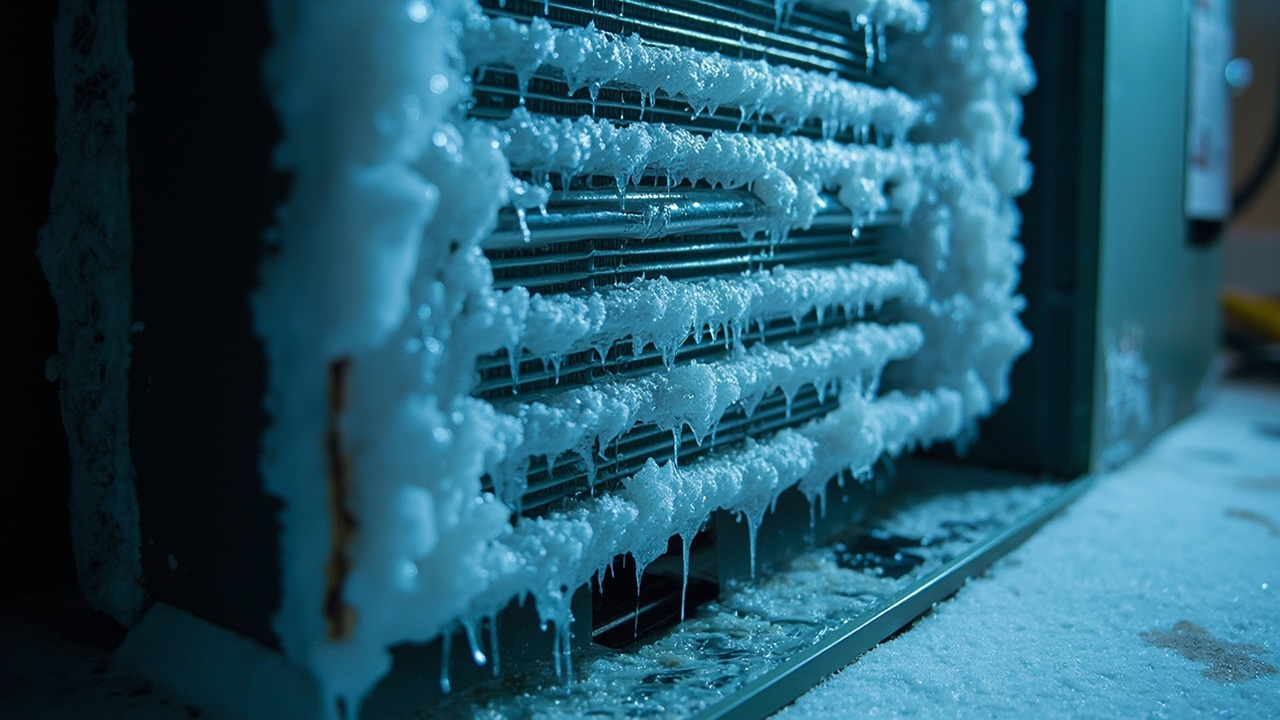
You walk past your air handler and see it. A solid block of ice coating the evaporator coil, dripping water onto your floor. Your home is warm, your system is running nonstop, and you are wondering how ice forms when it is 90 degrees outside.

A frozen ac evaporator coil is not a coincidence in Miami. The combination of relentless humidity, overnight temperature swings between 75 and 85 degrees, and systems that run 8 to 10 months straight creates the perfect conditions for ice buildup. When airflow drops or refrigerant pressure falls out of range, condensation freezes instead of draining away.

Most service calls for air conditioner coil freezing up stem from clogged filters, dirty coils, or low refrigerant caused by a slow leak. In older Miami homes with original ductwork, crushed or disconnected return ducts choke airflow and trigger the same ice formation. Builders in the 1970s and 1980s often used flex duct in tight attic spaces, and decades of heat have degraded those runs.

When you see ice on evaporator coil surfaces, your system is telling you something is wrong upstream. The coil itself is rarely the problem. The issue is restricted airflow, incorrect refrigerant charge, or a failing component like a blower motor or expansion valve. Ignoring frozen cooling coils leads to compressor failure, and that repair costs thousands. Addressing an ac evaporator iced over now saves you from a full system replacement later.

Miami homes in neighborhoods like Coral Gables, Pinecrest, and Coconut Grove often have older systems pushed beyond their design life. You need a diagnostic approach that traces the problem to its source.

Why Your AC Evaporator Coil Keeps Freezing in Miami's Climate
How We Diagnose and Fix a Frozen Evaporator Coil the Right Way

How We Diagnose and Fix a Frozen Evaporator Coil the Right Way

We do not guess. When you call us for a frozen ac evaporator coil, we begin by safely thawing the coil and inspecting the entire refrigerant circuit and airflow path. Turning the system back on while ice is present damages the compressor. We let it thaw completely, check the drain pan for clogs, and verify the condensate line is clear.

Next, we measure static pressure across the coil using a manometer. High static pressure means restricted airflow. We check filter condition, verify all supply and return registers are open, and inspect ductwork for blockages or disconnections. In Miami homes built before 2000, we often find return ducts that have collapsed in the attic or were never sized correctly during the original install.

Then we move to refrigerant diagnostics. We attach manifold gauges and compare suction and discharge pressures against manufacturer specs for your exact model and outdoor temperature. Low suction pressure indicates a refrigerant leak or a restriction in the metering device. High suction pressure points to an overcharge or a failing compressor. We do not add refrigerant without finding the leak first. That is a waste of your money and illegal under EPA Section 608 regulations.

We also test the blower motor amperage draw and capacitor microfarad rating. A weak blower motor cannot move enough air across the coil, and the temperature drop causes condensation to freeze. Capacitors degrade in Miami's heat, and a failing run capacitor cuts blower speed by 20 to 30 percent.

Once we identify the root cause, we explain it in plain terms, show you the failed component or restriction, and give you a transparent repair plan. No upselling. No scare tactics. Just the fix your system needs to stop air conditioner coil freezing up.

What Happens When You Call Us for a Frozen Coil

Iced Up Evaporator Coil in Miami – Expert Diagnosis and Proper Repair to Restore Cooling Fast
01

Safe Thaw and Inspection

We turn off your system to let the ice melt naturally and prevent compressor damage. While the coil thaws, we inspect the drain pan, condensate line, and filter condition. We check for water damage and verify the emergency shutoff switch is functioning. This step takes 45 to 90 minutes depending on ice thickness and ensures no hidden issues are overlooked.
02

Airflow and Refrigerant Testing

We measure static pressure, check ductwork integrity, and test blower motor performance. Then we attach refrigerant gauges and compare live pressures against factory specifications for your unit and current outdoor conditions. We use a leak detector to scan the coil, lineset, and service valves. This diagnostic phase pinpoints whether the problem is mechanical, airflow-related, or refrigerant-based.
03

Repair and System Restart

Once we identify the cause, we complete the repair, whether that means replacing a capacitor, cleaning coils, sealing a refrigerant leak, or adjusting the charge. We restart the system and monitor suction temperature and airflow for 20 minutes to confirm stable operation. You get a detailed explanation of what failed, what we fixed, and how to prevent it from happening again.

Why Miami Homeowners Choose Crestline HVAC for Evaporator Coil Problems

You need a technician who understands how Miami's climate and building stock affect HVAC performance. Systems here run longer and harder than anywhere else in the country. A frozen evaporator coil in Miami is rarely caused by a single issue. It is usually a combination of airflow restriction, refrigerant loss, and equipment wear accelerated by heat and humidity.

Crestline HVAC Miami has spent years working in neighborhoods from Brickell to South Miami, Kendall to Key Biscayne. We know the quirks of older concrete block homes with undersized return ducts. We have seen the ductwork mistakes made during the condo boom of the 2000s. We understand how salt air in coastal zones corrodes coil fins and copper linesets faster than inland homes.

We also know the local codes. Miami-Dade County requires permits for refrigerant work and duct modifications. We pull permits when required and ensure every repair meets Florida Building Code standards. That protects you during home sales or insurance claims.

You will not get a bait-and-switch estimate from us. If your system needs a blower motor, we tell you. If it just needs a filter and a coil cleaning, we tell you that too. We have no incentive to oversell because our reputation depends on repeat business and referrals in tight-knit Miami communities.

We also stock common parts on our trucks. That means most repairs for frozen cooling coils happen the same day. No waiting three days for a capacitor or a contactor. We fix it, test it, and get your home cool again without the runaround.

When you call Crestline HVAC Miami, you get a technician who shows up on time, explains the problem clearly, and completes the work right the first time.

What You Can Expect When We Service Your Frozen Evaporator Coil

Same-Day Service in Most Cases

We know how miserable a warm house feels in Miami. When you call us for a frozen ac evaporator coil, we prioritize same-day service if you reach us before 3 PM. Our technicians carry the most common parts, including capacitors, contactors, and refrigerant, so most repairs happen during the first visit. If we need a specialty part, we source it fast and return within 24 hours. You do not sit in the heat waiting for a callback.

Transparent Diagnostic Process

We walk you through every step of the diagnostic process. You see the gauge readings. You see the dirty coil or the failed capacitor. We explain what caused the ice buildup and why that specific repair fixes it. You get a written estimate before we start any work, and we do not charge you for repairs you do not approve. Our goal is to educate you so you understand what happened and how to prevent it.

Lasting Repairs That Solve the Problem

We do not slap on a temporary fix and hope it holds. When we repair an air conditioner coil freezing up, we address the root cause. That might mean cleaning coils, sealing a refrigerant leak, replacing a failing blower motor, or modifying ductwork. We test the system under load and verify stable operation before we leave. You get a repair that lasts, not a Band-Aid that fails again in two weeks.

Maintenance Plans to Prevent Future Freezing

Once your system is running correctly, we offer maintenance plans that catch problems before they cause frozen coils. Our plans include coil cleaning, refrigerant level checks, blower motor testing, and filter replacement. In Miami's climate, annual maintenance is not optional. It is the difference between a system that lasts 12 years and one that fails at 8. We send reminders so you never miss a service, and members get priority scheduling.

Frequently Asked Questions

You Have Questions,
We Have Answers

What causes ice on an evaporator coil? +

Ice forms on your evaporator coil when airflow drops or refrigerant pressure changes. In Miami, clogged filters are the top culprit due to high humidity and dust. A dirty coil, blocked return vents, or a failing blower motor also restrict airflow. Low refrigerant from a leak causes the coil temperature to drop below freezing. When warm, moist Miami air hits the cold coil without enough airflow, condensation freezes instantly. Refrigerant issues, thermostat problems, or a stuck expansion valve can also trigger icing. You need a professional diagnosis to pinpoint the exact cause and prevent repeat failures.

What is the best way to thaw out an iced up evaporator coil? +

Turn off your AC at the thermostat immediately. Switch the fan setting to ON to circulate air over the coil and speed thawing. This takes two to eight hours depending on ice thickness. Place towels around the indoor unit to catch water runoff. Never chip or scrape ice off the coil because you can damage the delicate aluminum fins. Do not restart your system until all ice melts and you address the root cause. In Miami's humid climate, running a frozen coil without fixing airflow or refrigerant issues will refreeze the coil within hours.

Will low refrigerant cause an evaporator to ice up? +

Yes. Low refrigerant is a common cause of evaporator coil icing. When refrigerant levels drop due to a leak, the pressure in the evaporator coil decreases. This causes the remaining refrigerant to expand and drop the coil temperature below 32 degrees. Moisture in Miami's humid air freezes on contact. A refrigerant leak does not fix itself. You need a certified technician to locate the leak, repair it, evacuate the system, and recharge it to manufacturer specifications. Running your AC low on refrigerant also damages the compressor and reduces cooling efficiency.

How to melt ice on an evaporator coil? +

Turn off the AC at the thermostat and set the fan to ON. This circulates warm air across the coil to melt ice naturally. Allow two to eight hours for complete thawing. Never use a heat gun, hairdryer, or sharp tools because you risk damaging the coil fins or refrigerant lines. Place towels or a drip pan under the unit to catch water. Once thawed, inspect your air filter and replace it if dirty. Do not restart the system until a technician identifies why the coil froze. Repeat icing means you have an unresolved airflow or refrigerant problem.

What is the likely cause for heavy icing in the evaporator coil? +

Heavy icing points to severe airflow restriction or major refrigerant loss. In Miami, a completely clogged filter from dust and humidity is the most common cause. A blocked return air grille, closed supply vents in multiple rooms, or a collapsed duct can also choke airflow. On the refrigerant side, a large leak or a stuck thermostatic expansion valve will cause extreme icing. A failing blower motor or a dirty evaporator coil surface also reduce airflow. Heavy ice buildup damages the compressor and requires immediate professional attention to prevent total system failure.

Can I turn my AC back on after it thaws? +

Not immediately. After the ice thaws completely, inspect your air filter and replace it if clogged. Check all return vents and supply registers to ensure nothing blocks airflow. If the filter was dirty and you replace it, you can attempt a restart. Monitor the system closely for 30 minutes. If ice begins forming again, shut down the AC and call a technician. Repeat icing means you have a refrigerant leak, a failing blower motor, or a deeper mechanical issue. Running a system that refreezes will damage the compressor and cost you more in repairs.

What are the six common causes of evaporator freezing? +

The six common causes are dirty air filters, low refrigerant from leaks, blocked return vents, failed blower motors, dirty evaporator coils, and malfunctioning thermostats. In Miami, clogged filters top the list due to high humidity and dust. Low refrigerant from leaks causes pressure drops and freezing. Blocked vents or a failing blower restrict airflow. A dirty coil surface prevents heat exchange. A faulty thermostat can run the system continuously without cycling off. Each cause requires a different fix. A technician will diagnose the specific issue and restore proper airflow or refrigerant levels.

What is the 3 minute rule for AC? +

The three minute rule prevents compressor damage after shutdown. When you turn off your AC, refrigerant pressure equalizes between the high and low sides of the system. This takes about three minutes. If you restart the compressor before pressure equalizes, the motor works against high head pressure and can overheat or fail. Most modern systems have a built in delay to enforce this rule. If your system short cycles or restarts immediately after shutdown, you may have a faulty control board or compressor issue that needs professional repair to prevent permanent damage.

Can you run AC with frozen coils? +

No. Running your AC with frozen coils will damage the compressor and reduce cooling efficiency to zero. Ice blocks airflow across the evaporator coil, preventing heat exchange. Your system runs continuously without cooling your home, wasting energy and overheating the compressor. In Miami's heat, a frozen coil also causes water damage from excessive condensation. Shut down the system immediately if you see ice forming. Running frozen coils can crack refrigerant lines, flood the compressor with liquid refrigerant, and lead to a costly replacement. Fix the root cause before restarting.

What is the $5000 AC rule? +

The $5000 AC rule is a guideline for repair versus replacement decisions. Multiply the age of your system by the repair cost. If the result exceeds $5000, replacement is smarter financially. For example, a 12 year old unit needing a $600 repair equals $7200, suggesting replacement. In Miami's humid climate, older systems lose efficiency and refrigerant capacity. If your system is over 10 years old and needs major repairs like a compressor or coil replacement, investing in a new energy efficient system saves you money on utility bills and prevents repeat breakdowns.

How Miami's Year-Round Humidity Makes Frozen Evaporator Coils More Common

Miami averages 76 percent relative humidity year-round, and that moisture load forces your evaporator coil to work harder than systems in drier climates. When airflow drops even slightly, the coil temperature falls below freezing and condensation turns to ice instead of draining away. Coastal neighborhoods near Biscayne Bay and the Atlantic see even higher humidity levels, especially during summer months when dew points stay above 75 degrees. That constant moisture exposure also accelerates dust and mold buildup on coil fins, which restricts airflow and triggers ice formation. Systems in inland areas like Kendall or Westchester face the same issue during the rainy season when humidity spikes to 90 percent for days at a time.

Crestline HVAC Miami has built a reputation in South Florida by understanding how local conditions affect air conditioning performance. We have worked in historic Coral Gables homes with original 1950s ductwork and new construction condos in Brickell with undersized air handlers. We know the permitting requirements for Miami-Dade County and follow Florida Building Code standards for every refrigerant repair and duct modification. When you hire a local company, you get a technician who has seen your exact problem in your exact type of home and knows how to fix it permanently.
HVAC Services in The Miami Area

We proudly serve homeowners and businesses throughout Miami and nearby communities with dependable HVAC services. Whether you're in the heart of downtown or in the surrounding suburbs, our team is just a call away. Check the map below to see our service coverage. If your area isn’t listed, don’t worry—give us a call. We frequently accommodate special requests and go the extra mile to ensure our customers receive expert heating and cooling solutions, no matter where they are located.

Address:
Crestline HVAC Miami, 2332 Galiano St, Miami, FL, 33134

Additional Services We Offer

Our news updates

Latest Articles & News from The Blogs

Commercial HVAC Services for Business Owners in Wynwood Who Can't Afford DowntimeRunning a business in the heart of Wynwood requires…

Commercial HVAC Services for Business Owners in Wynwood Who Can't Afford Downtime

Commercial HVAC Services for Business Owners in Wynwood Who Can't Afford DowntimeRunning a business in the heart of Wynwood requires…

Choosing Between Air Scrubbers and UV Lights for Your Home in the Sunset Neighborhood

Choosing Between Air Scrubbers and UV Lights for Your Home in the Sunset NeighborhoodLiving in the Sunset neighborhood near South…

Protecting Your Outdoor AC Unit During a Tropical Storm in Virginia Key

Virginia Key residents face unique challenges during the Atlantic hurricane season. The proximity to the ocean and low elevation make…

Contact Us

Do not wait for your compressor to fail. Call Crestline HVAC Miami at (645) 231-4777 now for same-day service. We diagnose the root cause, fix it right, and get your home cool again.