menu

Commercial Ventilation & Exhaust Systems in Miami | Minimize Downtime with Industrial-Grade Air Handling Solutions

Peak HVAC Tampa delivers commercial ventilation systems and industrial exhaust solutions engineered for Miami's demanding climate, ensuring continuous operations, regulatory compliance, and optimal indoor air quality for your facility.

Slider Image 1
Slider Image 2
Slider Image 3
Slider Image 4
Slider Image 5
Slider Image 7
Slider Image 8
Slider Image 9
Slider Image 10
Slider Image 11

Why Miami's Climate Demands Industrial-Grade Ventilation Infrastructure

Miami's subtropical climate creates ventilation challenges that directly impact your operational efficiency. Year-round humidity averaging 75 percent saturates indoor air, promoting mold proliferation and material degradation in commercial facilities. Salt-laden coastal air accelerates corrosion in mechanical ventilation systems, shortening equipment lifespan and increasing maintenance cycles.

Your facility faces constant pressure from heat loads generated by Miami's average summer temperatures exceeding 90 degrees. Without properly sized commercial air extraction systems, internal temperatures climb, reducing worker productivity and damaging temperature-sensitive inventory. Industrial kitchens, manufacturing floors, and warehouses require mechanical ventilation systems that can handle continuous operation under thermal stress.

Building code requirements in Miami-Dade County mandate specific air change rates and exhaust capacities for commercial spaces. Your system must meet Florida Building Code standards for makeup air, fire safety, and hazardous fume extraction. Noncompliance results in failed inspections, operational shutdowns, and liability exposure.

Poorly designed industrial exhaust solutions create negative pressure imbalances, pulling unconditioned outdoor air into your facility. This increases cooling costs and contaminant infiltration. Your commercial air extraction system must balance exhaust rates with supply air to maintain pressure differentials that protect indoor air quality while controlling energy consumption.

Miami's dense commercial districts present space constraints that complicate rooftop equipment placement and ductwork routing. Your industrial air handling infrastructure must integrate with existing structural limitations while delivering adequate airflow to all occupied zones.

Why Miami's Climate Demands Industrial-Grade Ventilation Infrastructure
Engineering Commercial Ventilation Systems for Continuous Operations

Engineering Commercial Ventilation Systems for Continuous Operations

We engineer mechanical ventilation systems based on your facility's actual load calculations, not generic sizing formulas. Our commercial air extraction designs account for process heat generation, occupancy density, and pollutant sources specific to your operations. We calculate required airflow using ASHRAE Standard 62.1 methodology, ensuring adequate outdoor air dilution for your space type.

Your industrial exhaust solutions require proper capture velocity at source points. We design hood configurations and duct sizing that maintain transport velocity for particulates, preventing settling and blockages. Exhaust fan selection factors in static pressure losses through ductwork, filters, and discharge conditions to ensure consistent performance.

Material selection determines system longevity in Miami's corrosive environment. We specify stainless steel or coated materials for coastal installations, extending service life and reducing replacement frequency. Motor enclosures receive NEMA 4X ratings for moisture protection, preventing premature failure in high-humidity environments.

Variable frequency drives on exhaust fans allow demand-based operation, reducing energy consumption during low-load periods. Your commercial ventilation systems integrate with building automation systems for scheduling and alarm monitoring. We install pressure sensors and airflow stations that provide real-time verification of system performance.

Makeup air units balance exhaust volumes with conditioned or tempered supply air, preventing infiltration and maintaining building pressurization. We size heating and cooling coils to temper incoming air efficiently, minimizing the load on your primary HVAC systems. Energy recovery units capture waste heat from exhaust streams, reducing operating costs while maintaining required ventilation rates.

Your industrial air handling systems require access panels and service platforms that enable routine maintenance without operational disruption. We design systems with redundancy for critical applications, ensuring ventilation continuity during equipment servicing.

How We Deliver Commercial Ventilation Solutions

Commercial Ventilation & Exhaust Systems in Miami | Minimize Downtime with Industrial-Grade Air Handling Solutions
01

Facility Assessment and Load Analysis

We conduct comprehensive on-site evaluation of your facility layout, process equipment, and existing infrastructure. Our engineers measure current airflow rates, pressure differentials, and pollutant concentrations to identify deficiencies. We document space constraints, utility locations, and structural limitations that affect system design. This assessment generates baseline data for engineering calculations and equipment specifications that meet your operational requirements and code compliance obligations.
02

System Design and Engineering

Our engineers develop detailed mechanical ventilation system designs incorporating ductwork layouts, equipment specifications, and control sequences. We perform load calculations for each zone, sizing exhaust fans and makeup air units to handle peak demand conditions. Drawings include equipment schedules, riser diagrams, and installation details for contractor execution. We submit designs to building officials for permit approval, managing the review process and addressing plan check comments to maintain project timelines.
03

Installation and System Commissioning

Licensed contractors install equipment and ductwork according to approved plans and manufacturer specifications. We supervise installation progress, verifying proper equipment placement, duct sealing, and electrical connections. Upon completion, we perform system commissioning that includes airflow verification, control sequence testing, and pressure balance confirmation. You receive complete documentation including operation manuals, maintenance schedules, and test reports demonstrating code compliance and design performance achievement.

Why Miami Businesses Trust Our Commercial Ventilation Expertise

Commercial facilities require ventilation contractors who understand Miami-Dade County building code requirements and permitting procedures. We maintain relationships with local building officials, expediting plan reviews and inspections that keep projects on schedule. Our familiarity with municipal review timelines prevents costly delays that impact your business operations.

Miami's commercial construction standards differ from other jurisdictions. High Velocity Hurricane Zone requirements mandate specific equipment ratings and installation methods for rooftop units exposed to wind loads. We specify equipment that meets Miami-Dade County product approval requirements, eliminating rejection risks during inspections.

Your industrial air handling systems require ongoing service from technicians who understand your equipment and operational constraints. We provide preventive maintenance programs that schedule filter changes, belt replacements, and bearing lubrication during off-hours, minimizing production interruptions. Our service vehicles stock common replacement parts for commercial ventilation systems, reducing downtime when components fail.

Energy costs represent significant operational expenses for commercial facilities. We analyze your utility rate structures and recommend control strategies that shift ventilation loads to off-peak periods when applicable. Variable speed drive retrofits on existing exhaust fans can reduce energy consumption by 40 percent while maintaining adequate ventilation rates.

Facilities in Miami's coastal zones face accelerated equipment degradation from salt exposure. We implement corrosion protection measures including protective coatings, sealed enclosures, and sacrificial anodes on condensing units. Regular inspections identify early corrosion signs before failure occurs, extending equipment service life and preventing emergency replacements.

Our commercial air extraction solutions integrate with your existing HVAC infrastructure, avoiding unnecessary equipment replacement. We assess compatibility with current control systems and modify interface requirements to maintain unified building management. This approach reduces capital expenditure while delivering necessary ventilation improvements.

What Your Commercial Ventilation Project Includes

Project Timeline and Scheduling Coordination

Commercial ventilation projects require careful scheduling to minimize business disruption. Design and permitting phases typically span four to six weeks depending on project complexity and municipal review workload. Installation duration varies based on system scope, ranging from weekend shutdowns for minor modifications to phased implementations over several weeks for major renovations. We coordinate with your operations team to schedule disruptive work during low-activity periods. Equipment procurement lead times affect project timelines, particularly for custom air handling units requiring eight to twelve week manufacturing cycles. We provide detailed schedules with milestone dates and critical path activities, enabling you to plan staffing and operational adjustments around construction activities.

Engineering Assessment and System Specifications

Initial consultation includes facility walkthrough with our mechanical engineers to evaluate existing conditions and discuss operational requirements. We review architectural drawings, equipment layouts, and utility capacities to identify constraints affecting system design. Load calculations incorporate process equipment heat generation, occupancy schedules, and outdoor air requirements based on your space classification. You receive detailed equipment specifications, ductwork layouts, and control sequences for review before procurement begins. This engineering phase identifies code compliance requirements, permit submission needs, and utility upgrade necessities. We present design options with performance comparisons and cost implications, allowing you to make informed decisions about system capacity and feature selection.

System Performance and Operational Efficiency

Properly engineered mechanical ventilation systems deliver measurable improvements in indoor air quality and temperature control. Your facility will maintain consistent pressure relationships that prevent contaminant migration between zones. Exhaust systems capture pollutants at source points before dispersing into occupied areas, reducing worker exposure and liability risks. Energy-efficient designs incorporate heat recovery and demand-based control, lowering utility costs compared to constant-volume operation. Commissioning verification confirms that installed equipment achieves design airflow rates and meets code-required ventilation standards. You receive test reports documenting system performance for building department approval and operational reference. Proper installation eliminates common problems including inadequate exhaust capture, excessive noise, and pressure imbalances that compromise comfort.

Maintenance Support and Service Agreements

Commercial ventilation systems require routine maintenance to sustain performance and prevent premature failure. We offer service agreements that include scheduled filter replacements, belt inspections, bearing lubrication, and motor testing at intervals appropriate for your equipment type. Quarterly inspections identify minor issues before escalating into costly breakdowns that disrupt operations. Service agreements provide priority scheduling and discounted labor rates for covered equipment. Our technicians maintain detailed service histories documenting maintenance activities, component replacements, and performance trends over time. This documentation supports warranty claims and helps plan capital replacement budgets. Emergency service availability ensures rapid response when unexpected failures occur, minimizing downtime impacts on your business operations.

Frequently Asked Questions

You Have Questions,
We Have Answers

What is the difference between exhaust system and ventilation system? +

Exhaust systems remove contaminated air from a specific area, like a bathroom fan pulling out moisture or a kitchen hood expelling cooking fumes. Ventilation systems move fresh air throughout your entire facility while replacing stale air. In Miami's humid climate, your commercial space needs both. Exhaust handles localized pollutants and odors. Ventilation controls temperature, dilutes airborne contaminants, and prevents mold growth. Your warehouse might use exhaust fans at loading docks but rely on a mechanical ventilation system to maintain air quality across the building. They work together to protect your indoor air quality and meet Florida building codes.

How much does a ventilation system cost? +

Commercial ventilation system costs range significantly based on your facility size, airflow requirements, and ductwork complexity. A small retail space might need a basic system, while a restaurant or manufacturing facility requires commercial-grade equipment with higher CFM ratings. Miami's humidity demands systems with enhanced dehumidification capacity, which impacts pricing. Ductwork modifications, rooftop unit installations, and energy recovery ventilators add to total investment. Most commercial projects require engineering assessments and permitting through Miami-Dade County. Focus on lifecycle costs, not just installation. A properly sized system reduces energy consumption and prevents humidity damage to your inventory and equipment.

What are the three types of ventilation systems? +

The three types are natural, mechanical, and hybrid ventilation. Natural ventilation uses windows, vents, and building design to create airflow without fans. Mechanical ventilation uses powered equipment like exhaust fans, supply fans, and air handling units to control air movement. Hybrid systems combine both approaches, using natural airflow when possible and mechanical backup when needed. In Miami, pure natural ventilation fails during summer months when you need maximum humidity control. Most commercial facilities require mechanical systems with balanced supply and exhaust. Your system type depends on your building use, occupancy loads, and specific code requirements for your industry sector.

How much does a home ventilation system cost? +

This question targets residential applications. For commercial facilities in Miami, your ventilation investment depends on square footage, occupancy density, and operational requirements. Office buildings need different systems than restaurants or medical facilities. Commercial-grade equipment costs more than residential units but provides higher airflow capacity and durability. Your system must handle Miami's humidity year-round while maintaining positive or negative pressure as required by your operations. Factor in ductwork, controls, and ongoing maintenance contracts. Do not compare residential pricing to commercial applications. Get a professional load calculation specific to your facility type and usage patterns to determine accurate costs and ROI.

Why don't people use attic fans anymore? +

Attic fans lost favor because they often create negative pressure that pulls conditioned air from living spaces into the attic, wasting energy. They can also draw moisture into attic spaces, causing mold problems in humid climates like Miami. Modern building science emphasizes proper attic insulation and passive ventilation through ridge and soffit vents. For commercial facilities, your focus should be on whole-building ventilation strategies that support your HVAC system efficiency. If your facility has heat load issues, commercial exhaust fans with proper makeup air provisions work better than old attic fan approaches. Consult an engineer before adding any exhaust-only systems.

How much does it cost to replace an exhaust vent? +

Replacing a commercial exhaust vent depends on the unit type, location, and accessibility. Rooftop exhaust fans require different labor than wall-mounted units. Miami installations need proper flashing and weatherproofing to handle tropical storms and heavy rainfall. Your replacement might include new ductwork, electrical connections, or structural support modifications. Restaurant hood exhaust systems cost more than bathroom exhaust fans due to grease management requirements and fire suppression integration. Factor in permit costs through Miami-Dade County and potential downtime during installation. Get multiple quotes from licensed contractors who understand local code requirements. Specify corrosion-resistant materials designed for coastal humidity exposure.

How long do ventilation systems last? +

Commercial ventilation systems last 15 to 25 years with proper maintenance. Miami's salt air and humidity reduce equipment lifespan if you skip preventive care. Your air handling units, exhaust fans, and ductwork face constant exposure to moisture and airborne contaminants. Belts, bearings, and motors need regular inspection and replacement. Coils corrode faster in coastal environments. Buildings near the water should use marine-grade components. Your system longevity depends on maintenance frequency, operating hours, and environmental conditions. Budget for component replacements throughout the lifecycle. A well-maintained system runs efficiently and avoids unexpected failures that disrupt operations. Schedule quarterly inspections minimum.

Are ventilators covered by insurance? +

Commercial property insurance typically covers ventilation equipment damaged by covered perils like hurricanes, fires, or sudden mechanical breakdowns if you have the right policy. Your standard policy might exclude wear and tear, corrosion, or maintenance-related failures. Business interruption coverage can help offset lost revenue during repairs. In Miami, hurricane damage to rooftop units and ductwork may be covered depending on your windstorm provisions and deductibles. Review your policy limits for equipment and business personal property. Document your ventilation system value and maintenance records. After storm damage, get professional assessments quickly to support your claim and prevent denial.

How much does it cost to put AC in a 1500 sq ft house? +

This question addresses residential HVAC, not commercial ventilation applications. For commercial facilities, cooling capacity requirements differ significantly from residential calculations. Your commercial space needs an engineered HVAC design based on occupancy, equipment heat loads, lighting, window exposure, and ventilation requirements. Miami's climate demands proper dehumidification beyond simple cooling. Commercial systems integrate with your ventilation requirements to maintain indoor air quality while controlling temperature and humidity. Do not extrapolate residential pricing to commercial applications. Your facility might need rooftop units, split systems, or chilled water systems depending on size and use. Get a professional mechanical engineer to calculate your actual requirements.

What are the 3 C's of ventilation? +

The three C's of ventilation are capture, contain, and control. Capture means removing contaminants at the source before they spread throughout your facility. Contain refers to preventing contaminated air from migrating to clean areas through proper pressure management. Control involves maintaining appropriate airflow rates and air changes per hour for your space type. In Miami commercial facilities, these principles apply to restaurants capturing cooking fumes, medical offices containing exam room air, and warehouses controlling dust and humidity. Your system design must address all three C's to meet Florida building codes and protect employee health while maintaining efficient operations.

How Miami's Coastal Environment Impacts Commercial Exhaust System Longevity

Facilities within five miles of Biscayne Bay or the Atlantic coast face aggressive corrosion that attacks commercial ventilation systems. Salt particles suspended in marine air deposit on metal surfaces, initiating electrochemical reactions that penetrate protective coatings. Exhaust fans and ductwork exposed to this environment experience accelerated material degradation, particularly at connection points where dissimilar metals contact. Standard mild steel components often show surface rust within months of installation in coastal Miami locations. Industrial air handling units require stainless steel construction or marine-grade coatings to achieve acceptable service life. Equipment selection must account for this corrosive environment to avoid premature replacement costs and system failures that interrupt your business operations.

Miami-Dade County enforces stringent building codes that exceed standard Florida requirements due to hurricane risk and coastal exposure. Commercial mechanical systems require product approvals demonstrating wind resistance and structural adequacy for High Velocity Hurricane Zone conditions. Rooftop exhaust fans must withstand 175 mph wind speeds without failure or detachment. Permitting processes involve detailed engineering submissions and third-party plan review, extending approval timelines compared to other jurisdictions. Contractors unfamiliar with local requirements face plan rejections and installation delays. We maintain current knowledge of municipal code amendments and product approval databases, ensuring your commercial air extraction systems meet all regulatory requirements before installation begins.
HVAC Services in The Miami Area

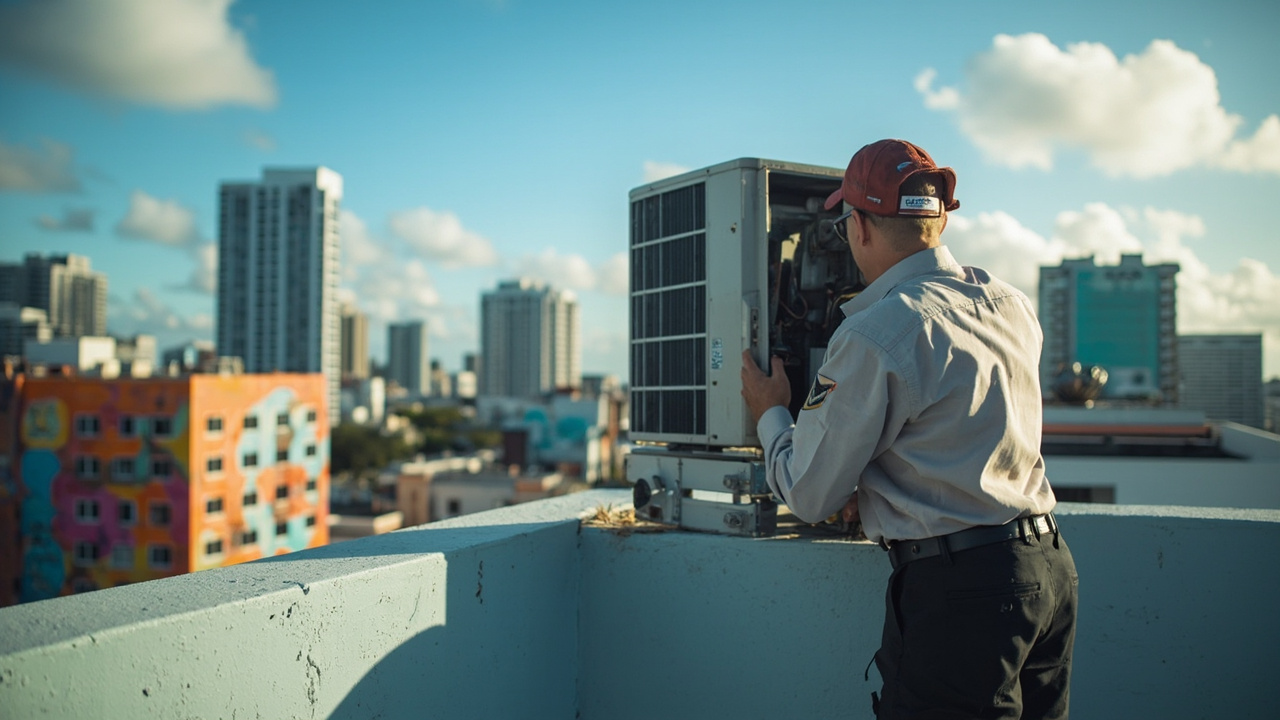
We proudly serve homeowners and businesses throughout Miami and nearby communities with dependable HVAC services. Whether you're in the heart of downtown or in the surrounding suburbs, our team is just a call away. Check the map below to see our service coverage. If your area isn’t listed, don’t worry—give us a call. We frequently accommodate special requests and go the extra mile to ensure our customers receive expert heating and cooling solutions, no matter where they are located.

Address:
Crestline HVAC Miami, 2332 Galiano St, Miami, FL, 33134

Additional Services We Offer

Our news updates

Latest Articles & News from The Blogs

Commercial HVAC Services for Business Owners in Wynwood Who Can't Afford DowntimeRunning a business in the heart of Wynwood requires…

Commercial HVAC Services for Business Owners in Wynwood Who Can't Afford Downtime

Commercial HVAC Services for Business Owners in Wynwood Who Can't Afford DowntimeRunning a business in the heart of Wynwood requires…

Choosing Between Air Scrubbers and UV Lights for Your Home in the Sunset Neighborhood

Choosing Between Air Scrubbers and UV Lights for Your Home in the Sunset NeighborhoodLiving in the Sunset neighborhood near South…

Protecting Your Outdoor AC Unit During a Tropical Storm in Virginia Key

Virginia Key residents face unique challenges during the Atlantic hurricane season. The proximity to the ocean and low elevation make…

Contact Us

Your commercial operations cannot afford ventilation system failures or code violations. Call (645) 231-4777 now to schedule an engineering assessment. We deliver industrial-grade solutions that protect your business continuity and meet Miami-Dade compliance requirements.