
Protecting Your Expensive AC Electronics from Florida Power Surges and Brownouts
Miami residents understand the power of a summer afternoon thunderstorm. The sky turns dark over the Everglades and within minutes the lightning begins. These weather events are not just loud. They are dangerous for your air conditioning system. Modern cooling units in 2026 are more efficient than ever but they are also more sensitive. The inverter boards and high-tech sensors that keep your home cool in the heat can fry in a millisecond when a surge hits the lines. Protecting your expensive AC electronics from Florida power surges and brownouts is the best way to avoid a total system failure when you need cooling the most.
The electrical grid in South Florida faces constant stress. Between the high demand for electricity during 100-degree days and the frequent lightning strikes, your home electrical system is a battlefield. Florida Power and Light works hard to maintain the infrastructure but they cannot stop every spike. A surge is a sudden increase in voltage that lasts for a fraction of a second. A brownout is a drop in voltage that can be just as damaging. Both of these events force your AC components to work outside of their design limits. If you do not have a dedicated surge protective device installed, your air conditioner is the only thing standing between the grid and a massive repair bill.
[IMAGE_PLACE_HOLDER_1]
The High Cost of Electronic Component Failure
In 2026, air conditioners are basically large computers that move heat. They use Variable Frequency Drives and complex communication boards to optimize energy use. These parts are expensive to manufacture and even more expensive to replace. When a surge hits an unprotected unit, it usually targets the weakest link. This is often the main control board or the inverter module. Replacing these parts requires specialized labor and expensive components. If your system is down, you might find yourself looking at what to do when your AC fails in the middle of a Miami heatwave while waiting for parts to arrive.
Repair costs for modern units have increased significantly over the last few years. A single lightning strike nearby can send a transient surge through your electrical panel and directly into your outdoor condenser. The compressor inside that unit is the heart of the system. While compressors are built to be tough, the electronics that start them are delicate. If the capacitor or the soft-start kit burns out, the compressor might not start at all. In some cases, the surge is strong enough to ground the compressor windings. This usually means the entire unit must be replaced.
| Component Type | Estimated Replacement Difficulty | Potential System Impact |
|---|---|---|
| Main Control Board | High | Complete system shutdown |
| Inverter Drive | Very High | Compressor will not run |
| EEV Stepper Motor | Moderate | Loss of cooling efficiency |
| Communicating Thermostat | Low | Loss of system control |
| Compressor Windings | Critical | Total system replacement required |
Understanding the Threat of Brownouts in Miami
Most homeowners worry about lightning but brownouts are a silent killer for AC motors. A brownout happens when the voltage drops below the standard 240 volts required for your system. This often happens in crowded areas like Brickell or Doral when everyone turns on their AC at the same time. When voltage drops, the amperage must increase to maintain the same amount of power. This extra amperage creates heat. Heat is the primary enemy of electrical insulation. Over time, frequent brownouts will bake the insulation on your motor windings until they short out.
High-rise residents have unique challenges with power stability. We often provide specialized AC maintenance needs for Brickell condo owners in high rise buildings because these structures have massive electrical loads. The constant switching of elevators and large chiller pumps can create internal surges that never even come from the outside grid. Protection is necessary at the individual unit level to ensure these internal fluctuations do not destroy your HVAC investment.
How Surge Protective Devices Save Your System
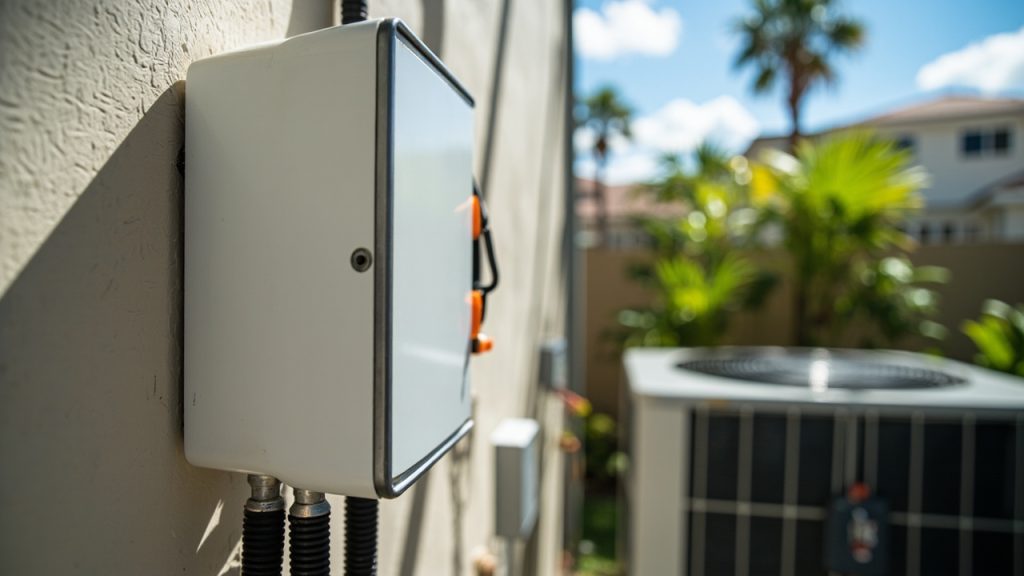
A professional Surge Protective Device or SPD acts like a pressure relief valve for electricity. When the voltage exceeds a certain threshold, the SPD redirects the excess energy safely to the ground. This happens in nanoseconds. The device uses Metal Oxide Varistors to clamp the voltage and keep it at a level that your AC electronics can handle. There are different types of protection available for Miami homes in 2026. A whole-home protector is installed at your main electrical panel. A point-of-use protector is installed directly at the AC disconnect box outside. Using both provides a layered defense that is much more effective than a single device.
According to the U.S. Department of Energy, surges can come from both external and internal sources. About 80 percent of surges are actually generated inside the home when large appliances like your refrigerator or pool pump cycle on and off. These small, repetitive hits degrade your AC circuit boards over time. This process is called electronic rust. It does not kill the unit instantly but it shortens the lifespan from 15 years down to 7 or 8 years. By installing a high-quality SPD, you stop this degradation and get the full value out of your equipment.
[IMAGE_PLACE_HOLDER_2]
Technical Specifications to Look For in 2026
Not all surge protectors are equal. When we install protection for our clients, we look at specific technical ratings. The clamping voltage is the most important number. This tells us at what point the device starts to divert electricity. For a 240-volt system, you want a clamping voltage that is low enough to protect the boards but high enough to avoid nuisance tripping. We also look at the Joules rating which measures how much total energy the device can absorb before it fails. In Miami, we recommend devices with higher ratings because of our extreme weather patterns.
- Clamping Voltage of 600V or less for maximum board protection
- Response time in the nanosecond range
- Thermal fused MOVs to prevent fire during a massive strike
- LED status indicators to show the device is still active
- Weatherproof housing for outdoor installation near the condenser
| Protection Tier | Clamping Voltage | Best Use Case |
|---|---|---|
| Basic Protector | 800V to 1000V | Older systems with no electronics |
| Standard SPD | 600V to 800V | Standard high efficiency units |
| Premium Inverter Grade | Under 600V | Variable speed and communicating systems |
Installation Nuances in Different Miami Neighborhoods
The age of your home affects how we approach surge protection. In places like Coral Gables, many homes have older electrical panels that may not have space for a traditional breaker-style SPD. We often assist homeowners by finding a reliable AC installation team for your home in Coral Gables that understands these historic building codes. We can mount external protectors that bypass the need for panel space while still providing full protection for the AC system. Newer homes in Doral or Sweetwater usually have more modern panels where we can install a whole-home solution more easily.
The salt air in Miami also plays a role in how these devices perform. Corrosion can weaken the ground connection which makes a surge protector useless. We make sure all connections are treated with anti-corrosion compounds. This is especially important for units near the coast. You can read more about how to stop Miami salt air from destroying your outdoor AC unit to see why every part of your system needs protection from the environment. A surge protector with a corroded ground wire cannot dump the excess voltage effectively during a storm.
The Critical Role of Professional Installation
While you can buy cheap surge strips at a big-box store, they will not protect your AC. These units require a hard-wired connection to the high-voltage lines. This is dangerous work that involves 240 volts of electricity. A licensed technician must ensure the device is phased correctly and that the ground wire is as short and straight as possible. Electricity follows the path of least resistance. If the ground wire has sharp bends or is too long, the surge will jump right past the protector and into your control board. We have the most trusted AC repair technicians serving Doral and Sweetwater who specialize in these precision installations.
Lightning is unpredictable and powerful. The National Weather Service reports that Florida has more lightning strikes per square mile than any other state. A direct strike on your house will likely bypass any protection you have. However, most damage comes from indirect strikes that hit a transformer or a neighbor’s house and travel through the grid. These are the surges we can stop. Investing in a professional SPD is a one-time cost that protects a multi-thousand-dollar asset. It is the cheapest insurance policy you can buy for your home comfort.
[IMAGE_PLACE_HOLDER_3]
Maintaining Your Protection Systems
Surge protectors are sacrificial devices. They are designed to take the hit so your AC does not have to. Every time they stop a surge, the internal components wear down slightly. Most modern SPDs have an indicator light. If that light is green, you are protected. If it is red or dark, the device has done its job and died. We check these lights during every routine maintenance visit. It is common for a Miami homeowner to go through several protectors over the life of an air conditioner. This is actually a good sign because it means those devices saved your unit from multiple potential failures.
If you notice your lights flickering often or your AC unit making a loud humming sound during startup, you might be experiencing voltage issues. These are warning signs that your electronics are under stress. Do not wait for the next major storm to find out if your system can survive. A quick inspection of your electrical connections and the installation of a dedicated SPD can give you peace of mind all summer long. Protecting your expensive AC electronics from Florida power surges and brownouts is a standard part of responsible home ownership in our tropical climate. Take the steps today to ensure your home stays cool tomorrow.