

Virginia Key residents face unique challenges during the Atlantic hurricane season. The proximity to the ocean and low elevation make every tropical storm a serious threat to your outdoor air conditioning equipment. Your condenser unit is the most expensive part of your cooling system. Leaving it unprotected during a storm can lead to costly repairs or a total system failure. You need to take specific steps to guard your investment against high winds and salt spray. Local building codes in Miami Dade County require specific safety measures that every homeowner must follow to stay compliant and safe.
Preparation begins long before a storm enters the Caribbean. You should inspect your unit mounting today. If you live near the Rickenbacker Causeway or the marinas on Virginia Key, your unit faces constant exposure to salt air. This weakens the metal components and makes them more likely to fail when the wind picks up. Most storm damage to HVAC systems comes from flying debris or flooding rather than the wind itself. Taking a few proactive steps can save you thousands of dollars in replacement costs. If you find your AC fails in the middle of a Miami heatwave, you will appreciate having a system that survived the storm intact.
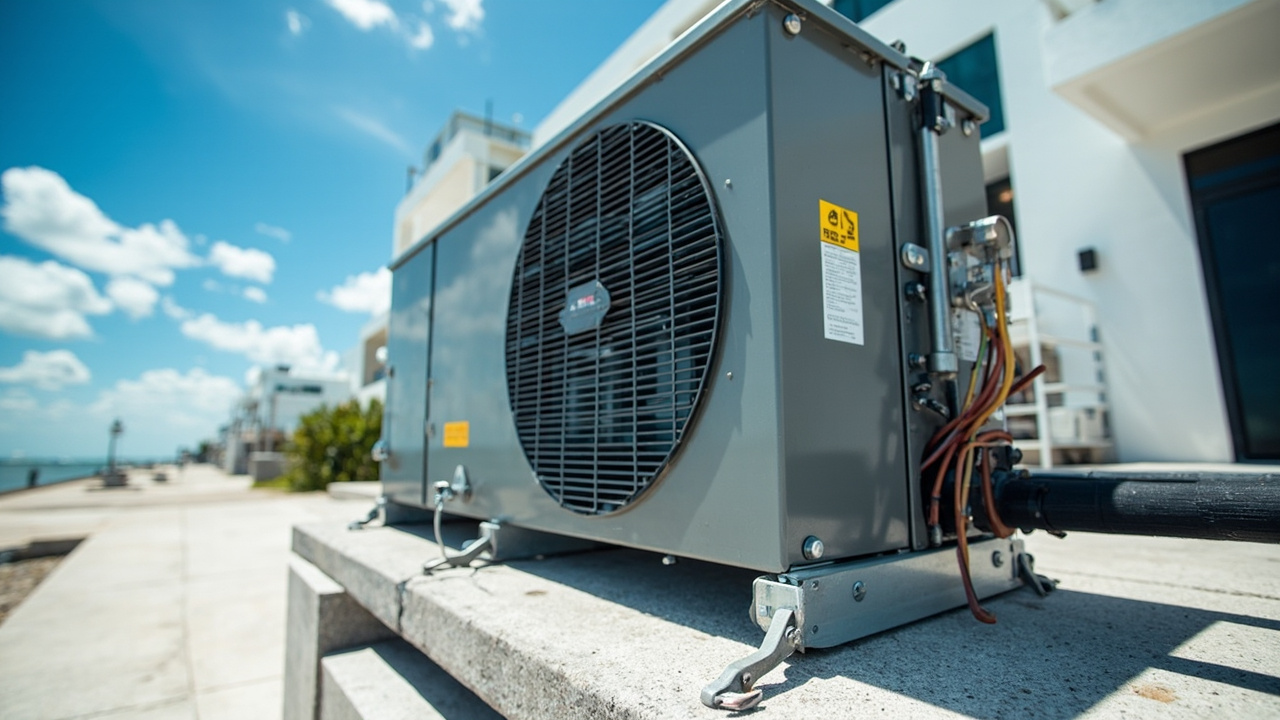
Securing Your Condenser Unit with Hurricane Straps
High winds can easily lift a residential condenser unit off its pad. In Virginia Key, wind speeds often exceed a hundred miles per hour during significant storms. You must use hurricane straps or tie downs that meet the current Miami Dade High Velocity Hurricane Zone standards. These straps are made of heavy duty galvanized steel or stainless steel to resist rust. They anchor the unit directly to the concrete pad. You should check the bolts for any signs of corrosion. Salt air eats through standard fasteners quickly. If the bolts look rusty, they will likely snap under the pressure of a tropical storm.
The concrete pad itself must be stable. If the ground has shifted or the pad is cracked, the straps will not provide adequate protection. Many homes in areas like Virginia Key and nearby Key Biscayne use elevated pads to avoid minor flooding. Make sure your pad is level and firmly attached to the ground. If you are unsure about the stability of your setup, you should contact a reliable AC installation team for your home in Coral Gables or surrounding areas to evaluate your mounting hardware. They can install modern tension cables or rigid straps that handle the uplift forces common in coastal Florida.
Hurricane Strap Specifications for Coastal Zones
| Hardware Type | Material Requirement | Wind Speed Rating | Recommended Application |
|---|---|---|---|
| Galvanized Steel Straps | G90 Coating or higher | Up to 150 MPH | Standard residential inland units |
| Stainless Steel Tie Downs | 316 Grade Stainless | Up to 180 MPH | Coastal properties and Virginia Key |
| Aluminum Brackets | High Strength Alloy | Up to 160 MPH | Wall mounted units on condos |
Electrical Safety and Surge Protection Measures
Lightning strikes and power surges are common during tropical storms in Miami. Your HVAC system contains sensitive circuit boards that can fry in an instant. Turning off your thermostat is not enough to protect the equipment. You must turn off the power at the dedicated circuit breaker inside your electrical panel. This prevents a surge from traveling through the lines if a transformer blows nearby. You should also pull the disconnect switch located in the box near your outdoor unit. This creates a physical gap in the electrical connection that offers the best protection against high voltage spikes.
Installing a dedicated surge protector for your HVAC system is a smart move for 2026. These devices mount directly to your outdoor disconnect or the indoor air handler. They sacrifice themselves to block a surge before it reaches your compressor. For those living in high density areas, such as specialized AC maintenance needs for Brickell condo owners often include surge protection due to the complexity of shared electrical grids. A surge protector is a low cost insurance policy for your most expensive appliance.
Flood Protection and Elevation for Virginia Key Properties
Virginia Key is highly susceptible to storm surge. Even a minor tropical storm can push seawater into residential areas. If water enters your outdoor unit while it is running, it will short out the fan motor and the compressor. Long term exposure to salt water causes rapid corrosion of the aluminum fins and copper coils. You should refer to the FEMA flood maps to understand the base flood elevation for your specific lot. If your unit sits below this level, consider having it raised onto a higher pedestal. A professional can extend the refrigerant lines and electrical conduits to accommodate the new height.
If you cannot raise the unit before a storm arrives, do not attempt to build a makeshift dam around it. Sandbags can help divert some water, but they often trap moisture against the unit. This moisture leads to rust. The best strategy is to ensure the area around the pad has clear drainage. Clear away any mulch, leaves, or dirt that might block the flow of water away from the system. Ensuring a clear path for runoff can prevent your unit from sitting in a puddle for days after the storm passes.
Comparison of Protection Costs Versus Replacement
| Service or Part | Estimated Protection Cost | Estimated Replacement Cost | Benefit Level |
|---|---|---|---|
| Hurricane Straps | Low | High | Essential for high winds |
| Surge Protector | Medium | Very High | Protects electronics |
| Unit Elevation | High | Very High | Vital for surge zones |
| Coil Cleaning | Low | Medium | Prevents salt corrosion |
Managing Debris and Proper Covering Techniques
One of the biggest mistakes homeowners make is wrapping their AC unit in plastic or a heavy tarp during a storm. This is dangerous. Plastic traps moisture inside the unit, which leads to rapid corrosion and mold growth on the coils. If the power stays on and the unit tries to run while covered, the motor will burn out because it cannot breathe. The only reason to cover a unit is to prevent small sticks and rocks from entering the top fan grate. If you choose to use a cover, it must be a breathable mesh designed for HVAC equipment. Most experts recommend leaving the unit uncovered and instead focusing on clearing the yard of potential projectiles.
Go around your property and secure any loose items. Patio furniture, potted plants, and garden tools become dangerous missiles in sixty mile per hour winds. These items can easily puncture the delicate aluminum fins of your condenser or sever the refrigerant lines. Cut back any tree branches that hang over the unit. In a tropical storm, these limbs often snap and crush the fan assembly. Taking thirty minutes to clean your yard is the most effective way to stop Miami salt air from destroying your outdoor AC unit and prevent mechanical damage from impacts.

Post Storm Inspection and System Recovery
Do not turn your air conditioner back on immediately after the storm passes. You need to perform a thorough visual inspection first. Look for any signs that the unit has shifted on its pad. Check the refrigerant lines for kinks or leaks. If you see oily residue near the connections, you likely have a leak. Inspect the electrical conduit for any cracks or exposed wires. If the unit was submerged in water at any point, do not restore power. You must have a technician clean and dry the components before starting the system.
Check the outdoor fan for debris. Leaves, twigs, and even trash can get sucked into the unit during high winds. If you find debris inside, use a garden hose to gently wash it out. Do not use a pressure washer, as high pressure water will flatten the soft aluminum fins and restrict airflow. Once you are sure the unit is clear and dry, you can flip the breaker back on. Listen for any unusual noises like grinding or buzzing. If the system sounds different than usual, shut it off and call for professional help. Residents can reach out to the most trusted AC repair technicians serving Doral and Sweetwater and Virginia Key for a professional safety check.
- Turn off the circuit breaker inside your home.
- Pull the outdoor disconnect switch near the condenser.
- Remove all loose debris within ten feet of the unit.
- Verify that hurricane straps are tight and bolts are secure.
- Wait for the storm to fully pass before inspecting the system.
- Wash away salt residue with a low pressure garden hose after the wind stops.
Understanding Miami Dade HVAC Building Codes
The building codes in Miami are among the strictest in the world. This is due to our history with major hurricanes. Any new AC installation in 2026 must adhere to the Florida Building Code and specific local amendments. These codes dictate the exact height a unit must be above the ground and the type of fasteners used for wind resistance. If you live in Virginia Key, your equipment must be rated for the High Velocity Hurricane Zone. This means the unit and its mounting must withstand higher wind loads than systems installed in other parts of the country.
According to the Miami Dade County Building Department, unauthorized modifications to your AC mounting can lead to fines or issues with your home insurance. When you hire a contractor, ensure they understand the coastal requirements for salt spray protection and wind tie downs. Using non compliant hardware can result in your insurance company denying a claim for storm damage. Always keep records of your maintenance and any upgrades you make to the system mounting. This documentation is vital if you ever need to file a claim after a tropical storm.

Mitigating Long Term Saltwater Damage
Even if a storm does not hit your home directly, the wind carries a fine mist of salt spray across Virginia Key. This salt settles on your evaporator and condenser coils. Salt is highly corrosive to the metals used in modern high efficiency air conditioners. Over time, it causes a process called formicary corrosion, which creates tiny pinhole leaks in the copper tubing. After every major weather event, you should rinse your outdoor unit with fresh water. This simple step removes the salt crust and extends the life of your equipment.
Many homeowners in Miami now choose units with factory applied anti corrosive coatings. These coatings provide an extra layer of defense against the harsh coastal air. If your system does not have this protection, you can have a professional apply a specialized spray during your annual maintenance visit. This is especially important for properties located directly on the water. Keeping your coils clean and protected ensures your system operates at peak efficiency during the hot summer months. Regular maintenance is the key to preventing a total system breakdown when you need cooling the most.
Taking the time to protect your outdoor AC unit is a necessary part of living in Virginia Key. By securing the hardware, managing your electrical safety, and performing post storm inspections, you can ensure your home stays comfortable year round. Do not wait for a storm to be on the horizon. Start your preparations today to safeguard your cooling system against the elements. If you need assistance with hurricane straps or coastal maintenance, contact a local professional who understands the unique needs of Miami coastal residents.