
menu

Server Room Cooling Solutions in Miami – Industrial-Grade Precision Systems That Prevent Downtime and Equipment Loss

Peak HVAC Tampa delivers computer room air conditioning and data center cooling units engineered for South Florida's extreme heat and humidity, protecting your critical infrastructure 24/7 with minimal business interruption.

Slider Image 1
Slider Image 2
Slider Image 3
Slider Image 4
Slider Image 5
Slider Image 7
Slider Image 8
Slider Image 9
Slider Image 10
Slider Image 11

Why Standard HVAC Systems Fail Miami Server Rooms

Your standard commercial HVAC cannot handle the thermal load generated by densely packed server racks. In Miami, where outdoor temperatures average 89°F from June through September and relative humidity hovers near 75%, the margin for error shrinks to nothing. Standard systems cycle on and off, creating temperature swings that degrade hard drives and corrupt data. They lack the filtration required to keep salt-laden coastal air from corroding circuit boards.

Server room air conditioning demands precision cooling systems that maintain temperature within 2°F and humidity within 5% RH. Your equipment generates heat 24 hours per day. A single thermal event can cascade into hardware failure, data loss, and revenue hemorrhage that dwarfs the cost of proper infrastructure.

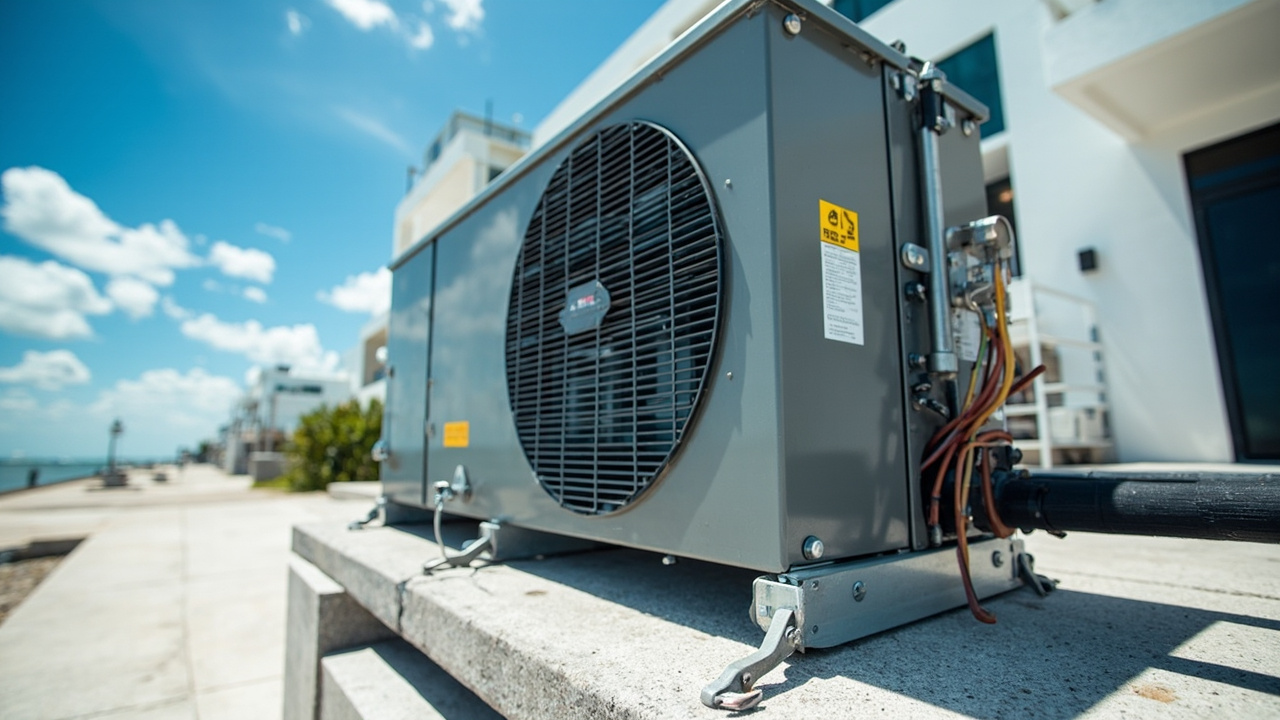
Miami's coastal location adds another variable. Salt air accelerates corrosion on condenser coils and electrical contacts. Standard condensers placed on rooftops or ground pads near the ocean fail faster here than anywhere inland. Computer room air conditioning units require marine-grade coatings and stainless steel components to survive the environment.

You face additional risk from power instability during hurricane season. Data center cooling units must integrate with backup generators and UPS systems to maintain uptime when the grid fails. A precision cooling system that cannot ride through a 200-millisecond power dip is inadequate for Miami operations.

The financial impact is simple math. For every minute your server room exceeds 77°F, you accelerate component failure. For every percentage point of humidity above 60%, you increase the risk of electrostatic discharge and short circuits. Generic HVAC creates operational liability. Server rack cooling systems eliminate it.

Why Standard HVAC Systems Fail Miami Server Rooms
How Precision Cooling Differs from Standard Commercial HVAC

How Precision Cooling Differs from Standard Commercial HVAC

Precision cooling systems operate on fundamentally different principles than comfort cooling. Standard HVAC prioritizes air temperature. Precision systems control sensible heat, latent heat, and airflow simultaneously. The difference matters when your equipment density exceeds 5 kW per rack.

We size computer room air conditioning based on actual heat load, not square footage. A 500-square-foot server room generating 60 kW requires different capacity than a 500-square-foot office. We calculate BTU requirements from server specifications, rack density, lighting loads, and human occupancy. We then add 20% overhead for Miami's ambient conditions and future expansion.

Redundancy is non-negotiable. We install N+1 configurations as minimum viable infrastructure. If you need 90 tons of cooling, we install three 45-ton units rather than two 45-ton units. When one unit cycles into defrost or requires maintenance, your environment remains stable. For mission-critical operations, we recommend 2N redundancy, where you can lose half your capacity without impact.

Airflow management separates adequate systems from excellent ones. We install hot aisle containment or cold aisle containment depending on your rack layout. Containment prevents bypass airflow and recirculation, which reduces cooling capacity by 30% in uncontained environments. We use computational fluid dynamics modeling to identify hot spots before installation.

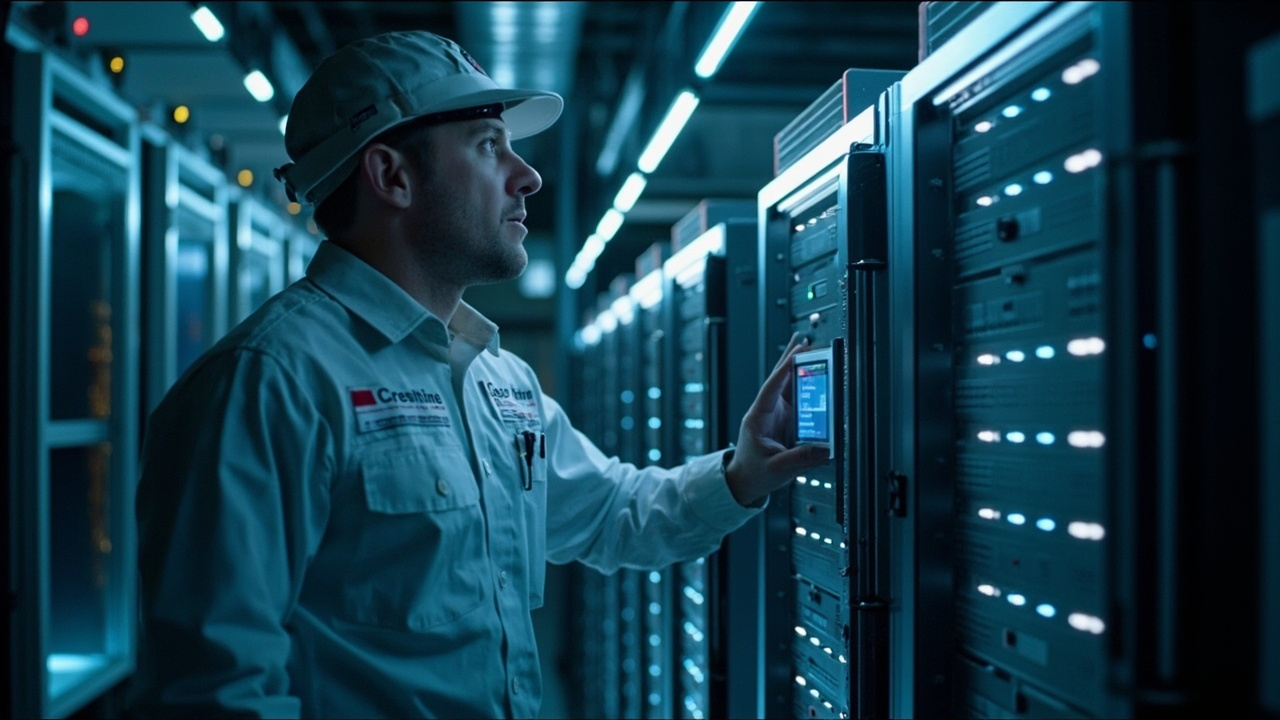
Control systems matter as much as equipment. We install building management systems that monitor supply air temperature, return air temperature, humidity, differential pressure, and power consumption in real time. You receive alerts when any parameter drifts outside acceptable range. The system logs data for trend analysis and predictive maintenance.

Peak HVAC Tampa sources equipment rated for continuous operation in coastal environments. We specify scroll compressors rather than reciprocating compressors for reliability. We use electronically commutated motors for redundant fans. Every component is selected for mean time between failures exceeding 100,000 hours.

How We Design and Deploy Your Cooling Infrastructure

Server Room Cooling Solutions in Miami – Industrial-Grade Precision Systems That Prevent Downtime and Equipment Loss
01

Load Calculation and Design

We audit your existing infrastructure and document every heat source. This includes server power draws, switch and router loads, UPS inefficiency, lighting, and building envelope heat gain. We measure actual amperage at rack PDUs rather than relying on nameplate ratings. We use thermal imaging to identify current hot spots and airflow problems. The result is a precision cooling system sized for actual demand, not guesswork.
02

Equipment Selection and Integration

We specify data center cooling units compatible with your existing electrical infrastructure and physical space constraints. For tight spaces, we install ceiling-mounted units or vertical floor-mounted units. For rooftop installations near the coast, we specify marine-grade condensers with enhanced corrosion protection. We coordinate with your electrical contractor to ensure backup power integration. Every component is selected for reliability in Miami's climate.
03

Commissioning and Monitoring

We commission the system under full load to verify performance. We document baseline metrics for temperature stratification, humidity control, and power consumption. We configure alarm thresholds in your building management system and verify remote monitoring capability. We train your facilities team on routine maintenance and emergency procedures. You receive complete as-built documentation including mechanical, electrical, and control diagrams. We schedule quarterly preventive maintenance to sustain reliability.

Why Miami Businesses Trust Peak HVAC Tampa for Critical Cooling

Peak HVAC Tampa understands the specific challenges of maintaining server room environments in South Florida. We have commissioned precision cooling systems for financial services firms in Brickell, healthcare data centers in Miami Beach, and colocation facilities in Doral. We know which equipment survives salt air and which fails within 18 months.

Miami-Dade County requires mechanical permits for server room modifications exceeding 10 tons of cooling capacity. We handle the permitting process and coordinate inspections. We understand Florida Building Code requirements for emergency power integration and fire suppression system interaction. Your installation passes inspection the first time because we know what inspectors look for.

Our technicians hold manufacturer certifications for the precision cooling brands we install. We stock critical replacement components locally, which matters when a compressor fails at 2 AM and every hour of downtime costs you five figures. We maintain service contracts with 4-hour response guarantees for clients who cannot tolerate extended outages.

We have relationships with backup power providers, electrical contractors, and fire suppression specialists. When your project requires coordinated installation across multiple trades, we manage the schedule and interface points. You deal with one point of contact rather than coordinating four separate contractors.

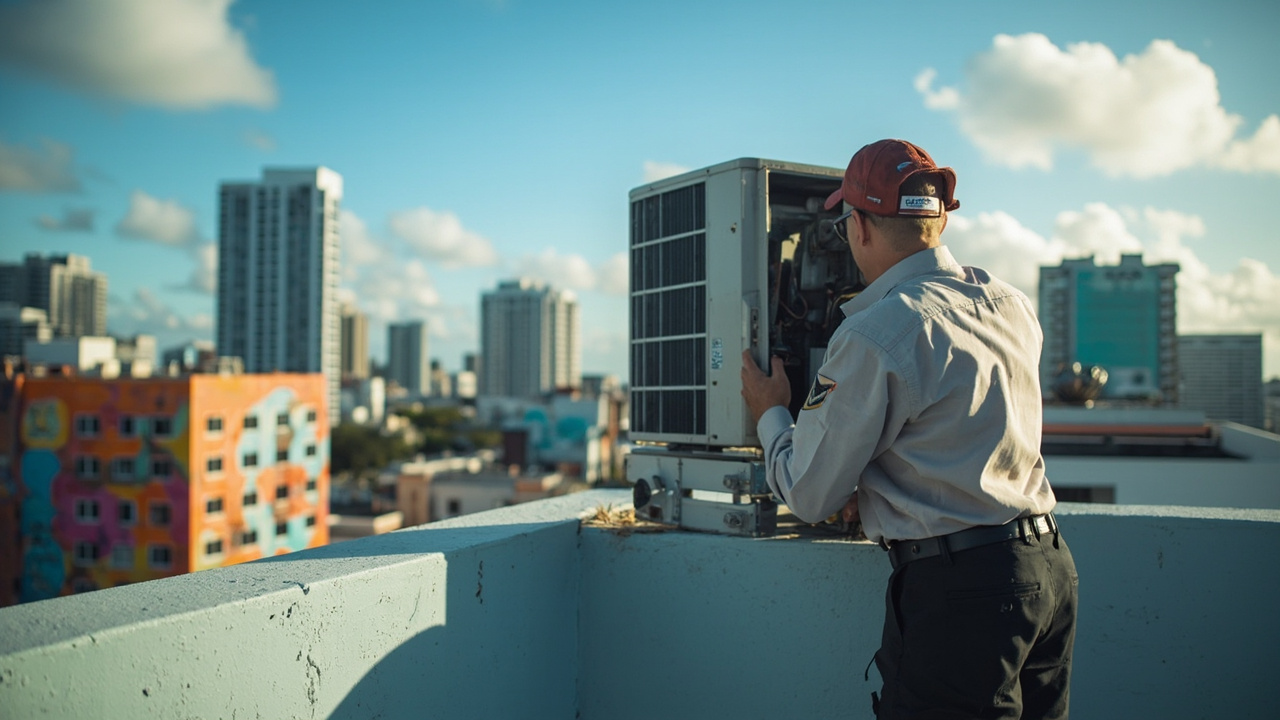
Miami's hurricane risk makes business continuity planning essential. We design systems that maintain operation during grid outages. We specify equipment that can start and run on generator power without voltage conditioning equipment. We install condensers on reinforced pads or rooftop frames engineered for 180 mph wind loads per Florida Building Code High Velocity Hurricane Zone requirements.

Your competitive advantage depends on infrastructure that never fails. We build precision cooling systems that protect your investment in servers, storage, and networking equipment. We eliminate the operational risk created by inadequate environmental control.

What You Can Expect from Your Precision Cooling Project

Project Timeline and Phasing

Design and engineering typically require two to three weeks depending on complexity. Equipment procurement takes four to six weeks for precision cooling units, longer for custom configurations. Installation duration depends on whether we can phase the work to maintain uptime or require a maintenance window. For retrofit projects in occupied data centers, we stage equipment delivery and work overnight or on weekends to minimize disruption. For new construction, we coordinate with the general contractor's schedule. We provide a detailed project timeline during the design phase and update you weekly on progress. We build contingency into the schedule for Miami's summer weather, which can delay rooftop work.

Site Assessment and Engineering

We conduct a comprehensive site survey before proposing solutions. This includes measuring electrical service capacity, evaluating structural support for equipment weight, assessing condensate drainage paths, and identifying optimal locations for supply and return air. We use thermal imaging to document current conditions and identify problems invisible to visual inspection. We review your IT roadmap to ensure the cooling system can accommodate planned growth. The assessment identifies constraints early, preventing change orders during installation. We deliver mechanical drawings, electrical schematics, and equipment schedules that your facilities team can use for future planning. The engineering phase eliminates surprises and ensures the system integrates cleanly with your existing infrastructure.

Performance and Reliability Standards

Your precision cooling system will maintain temperature within plus or minus 2°F of setpoint and relative humidity between 45% and 55% under all load conditions. Redundant components ensure continued operation during equipment failure or maintenance. We verify performance through 72-hour continuous monitoring after commissioning. We document airflow patterns, temperature stratification, and power consumption under varying loads. You receive baseline performance data that establishes benchmarks for future troubleshooting. The system includes alarms for high temperature, low airflow, filter loading, refrigerant leaks, and compressor failure. Remote monitoring allows our technicians to diagnose problems before they cause downtime. Equipment carries manufacturer warranties, and we offer extended service agreements that guarantee response times and parts availability.

Ongoing Maintenance and Support

Precision cooling systems require quarterly preventive maintenance to sustain reliability. We inspect refrigerant levels, clean condenser coils, replace filters, verify control calibration, and test safety systems. We perform thermal scans to identify developing problems before they cause failure. We trend performance data to identify degradation that indicates component wear. For clients with service agreements, we provide 24/7 emergency response with guaranteed arrival times. We stock replacement parts for the equipment we install, which eliminates the delays associated with ordering obscure components. We train your facilities staff on routine tasks like filter replacement and alarm response. We provide annual reports that document system performance and recommend capital improvements. Proper maintenance extends equipment life beyond 15 years and prevents the catastrophic failures that destroy servers.

Frequently Asked Questions

You Have Questions,
We Have Answers

How to cool down a server room? +

Install dedicated precision cooling units designed for server environments. These systems maintain consistent temperatures between 68-72°F and control humidity levels critical in Miami's high-moisture climate. Deploy hot aisle/cold aisle containment strategies to separate exhaust heat from intake air. Use supplemental cooling like in-row units for high-density racks. Monitor ambient temperature continuously with sensors that trigger alerts before equipment fails. Seal cable entry points and eliminate air leaks that introduce humid outdoor air. Commercial-grade server room cooling differs from standard office AC because it runs 24/7, handles concentrated heat loads, and prevents the condensation issues that plague Miami facilities.

What is the $5000 rule for AC? +

The $5000 rule guides commercial HVAC replacement decisions based on equipment age and repair costs. Multiply the system age by repair cost. If the result exceeds $5000, replace rather than repair. For a 10-year-old unit needing $600 in repairs, the calculation yields $6000, indicating replacement makes financial sense. This rule prevents throwing money at aging equipment that will fail again. Miami businesses face accelerated system wear from constant cooling demands and salt air corrosion. The rule helps facility managers make data-driven decisions that minimize downtime and control long-term operating costs rather than reacting emotionally to repair quotes.

How to remove heat from a server room? +

Remove server room heat through dedicated exhaust systems that vent hot air outside or into unconditioned spaces. Install rear-door heat exchangers on server racks to capture heat at the source before it enters the room. Use raised floor plenums to distribute cold air directly under equipment intakes while extracting hot air from ceiling return vents. Deploy liquid cooling systems for ultra-high-density installations where air cooling cannot handle thermal loads. In Miami, ensure exhaust discharge points face away from fresh air intakes to prevent recirculation. Calculate total heat load in BTUs by adding server wattage, UPS losses, and lighting to properly size removal capacity.

How to cool a server room without AC? +

Cool server rooms without traditional AC using evaporative cooling in low-humidity environments, though Miami's moisture makes this impractical. Deploy free cooling systems that use outside air during cooler months, limited to December through February locally. Install heat pipes or thermosiphons that passively transfer heat through refrigerant phase changes. Use liquid cooling with chilled water loops connected to remote chillers or cooling towers. Implement thermal mass solutions like phase-change materials that absorb heat temporarily. These alternatives work for specific applications but most Miami server rooms require mechanical refrigeration due to year-round heat and the 80-plus percent humidity that prevents passive cooling methods from functioning effectively.

Does putting ice behind a fan work? +

Placing ice behind a fan provides minimal, temporary cooling unsuitable for server rooms. The ice melts quickly, adds moisture to the air, and creates condensation that damages electronics. This residential trick cannot handle the concentrated thermal loads servers generate. Miami server rooms require 24/7 climate control with redundancy. A single rack can produce 5-15 kW of heat, which overwhelms makeshift cooling methods within minutes. Commercial precision cooling systems remove heat continuously while controlling humidity between 40-60 percent to prevent static discharge and corrosion. Ice-based cooling indicates an emergency requiring immediate professional intervention before equipment failure causes business interruption and data loss.

Is 80 degrees too hot for a server room? +

Yes, 80°F exceeds safe server room operating temperatures. Most server manufacturers specify maximum ambient temperatures of 77°F, with optimal ranges between 68-72°F. At 80°F, equipment experiences accelerated component degradation, increased failure rates, and thermal throttling that reduces processing performance. Hard drives fail faster in sustained heat. Miami facilities already battle outdoor temperatures exceeding 90°F with high humidity that compounds cooling challenges. Operating at elevated temperatures voids warranties and increases the risk of cascade failures where one overheated component triggers others. Install monitoring systems that alert you before temperatures reach critical thresholds. Address cooling deficiencies immediately to protect your infrastructure investment and prevent costly downtime.

What is the 3 minute rule for AC? +

The 3-minute rule prevents compressor damage by requiring a minimum delay between cooling cycles. When AC systems short-cycle, turning on and off rapidly, refrigerant pressure does not equalize between the high and low sides. Starting the compressor against unequal pressure causes mechanical stress, overheating, and premature failure. Precision cooling systems for server rooms include built-in delay timers. In Miami, where cooling systems run almost continuously, short-cycling typically indicates oversized equipment, refrigerant leaks, or failed components. This damages both the HVAC system and creates temperature fluctuations harmful to servers. Commercial systems need proper staging and controls that prevent rapid cycling while maintaining stable conditions.

How many BTU do I need to cool a 20x20 room? +

A 20x20 room requires approximately 8,000-12,000 BTUs for standard office cooling, but server rooms demand different calculations. You must calculate heat load based on equipment wattage, not square footage. Convert total server wattage to BTUs by multiplying by 3.41, then add 25-30 percent for UPS inefficiency, lighting, and safety margin. A modest server room with 10 kW of IT equipment needs roughly 40,000 BTUs of cooling capacity. Miami facilities require additional capacity to combat outdoor heat and humidity infiltration. Undersized cooling causes equipment failure. Oversized systems short-cycle and fail to dehumidify properly. Professional load calculations prevent costly mistakes and ensure adequate redundancy for business continuity.

Does keeping the AC at 72 save money? +

Keeping AC at 72°F does not save money in server rooms where equipment protection outweighs energy costs. Each degree you raise the thermostat saves approximately 3 percent on cooling costs in residential settings, but server environments require stable temperatures regardless of energy prices. The cost of a single server failure from heat stress exceeds months of cooling expenses. Miami businesses face year-round cooling demands that make temperature management a reliability issue rather than a conservation opportunity. Focus on efficiency through proper containment, eliminating hot spots, and using economizers when outdoor conditions permit. Reducing server room temperatures below specifications risks condensation and wastes money without providing additional protection.

How do the amish keep cool in the summer? +

This question does not relate to commercial server room cooling solutions. Miami businesses need professional-grade precision cooling systems that maintain stable temperatures and humidity 24/7 to protect critical infrastructure. Passive cooling methods cannot handle the concentrated thermal loads modern IT equipment generates. Focus on redundant cooling architecture, hot aisle containment, and monitoring systems that prevent downtime. Your server room requires engineered solutions designed for South Florida's climate challenges, including hurricane-resistant installations and backup power integration. Consult with commercial HVAC specialists who understand data center cooling requirements rather than adapting residential or historical cooling practices that cannot protect business-critical equipment or maintain uptime requirements.

How Miami's Coastal Climate and Hurricane Risk Affect Data Center Cooling Design

Miami's location between Biscayne Bay and the Everglades creates unique environmental challenges for server room cooling. Salt-laden air corrodes aluminum condenser fins within months if equipment lacks proper coatings. Humidity averages 76% year-round, which means precision cooling systems must remove latent heat continuously to prevent condensation inside enclosures. Summer afternoon thunderstorms cause voltage sags that disrupt standard HVAC controls. Hurricane season from June through November requires backup power integration and wind-rated equipment mounting. We design computer room air conditioning systems that account for these specific Miami conditions rather than applying generic specifications developed for temperate climates.

Florida Building Code High Velocity Hurricane Zone requirements mandate enhanced structural attachment for rooftop equipment and backup power for essential facilities. Miami-Dade County enforces the most stringent mechanical code in Florida, requiring detailed load calculations, duct leakage testing, and refrigerant leak detection for systems above certain capacities. We maintain relationships with county inspectors and understand their interpretation of code requirements for data center cooling. Our installations pass inspection without corrections because we design to the local jurisdiction's expectations. This local expertise prevents the delays and cost overruns common when out-of-area contractors attempt projects in Miami without understanding the regulatory environment.
HVAC Services in The Miami Area

We proudly serve homeowners and businesses throughout Miami and nearby communities with dependable HVAC services. Whether you're in the heart of downtown or in the surrounding suburbs, our team is just a call away. Check the map below to see our service coverage. If your area isn’t listed, don’t worry—give us a call. We frequently accommodate special requests and go the extra mile to ensure our customers receive expert heating and cooling solutions, no matter where they are located.

Address:
Crestline HVAC Miami, 2332 Galiano St, Miami, FL, 33134

Additional Services We Offer

Our news updates

Latest Articles & News from The Blogs

Commercial HVAC Services for Business Owners in Wynwood Who Can't Afford DowntimeRunning a business in the heart of Wynwood requires…

Commercial HVAC Services for Business Owners in Wynwood Who Can't Afford Downtime

Commercial HVAC Services for Business Owners in Wynwood Who Can't Afford DowntimeRunning a business in the heart of Wynwood requires…

Choosing Between Air Scrubbers and UV Lights for Your Home in the Sunset Neighborhood

Choosing Between Air Scrubbers and UV Lights for Your Home in the Sunset NeighborhoodLiving in the Sunset neighborhood near South…

Protecting Your Outdoor AC Unit During a Tropical Storm in Virginia Key

Virginia Key residents face unique challenges during the Atlantic hurricane season. The proximity to the ocean and low elevation make…

Contact Us

Your servers cannot tolerate another summer of inadequate cooling. Call Peak HVAC Tampa at (645) 231-4777 for a comprehensive site assessment. We will calculate your actual heat load, identify vulnerabilities, and design a precision cooling system that eliminates downtime risk.